

Skillmatics Guess in 10 NASA Space, Perfect for Boys, Girls, Kids & Families Who Love Card Games, Educational Toys, Travel Games, Gifts for Ages 8, 9, 10 and Up
You know those evenings when the television is full of options but nothing seems worthy of your dwindling attention span? This game gives you something better: a reason to talk to your relatives without scrolling through your phone for escape routes. Skillmatics Guess in 10 NASA Space is a card-based guessing game that hands you 10 yes-or-no questions and a lifetime of minor triumphs and theatrical failures. You’ll ask, you’ll guess, and you’ll learn whether the thing on the card is a planet, a star, or an item that somehow made it into the NASA archives because someone thought it was photogenic.
What this game is (and why it’s not smugly educational)
This is a portable, competitive, and surprisingly gentle way to learn about space. The game uses real NASA images, which means your kids will be looking at astrophotography so beautiful it makes you feel both small and incurably interested. It’s not a lecture; it’s a contest. You get to be wrong in public, which—let’s be honest—is one of life’s underrated pleasures.
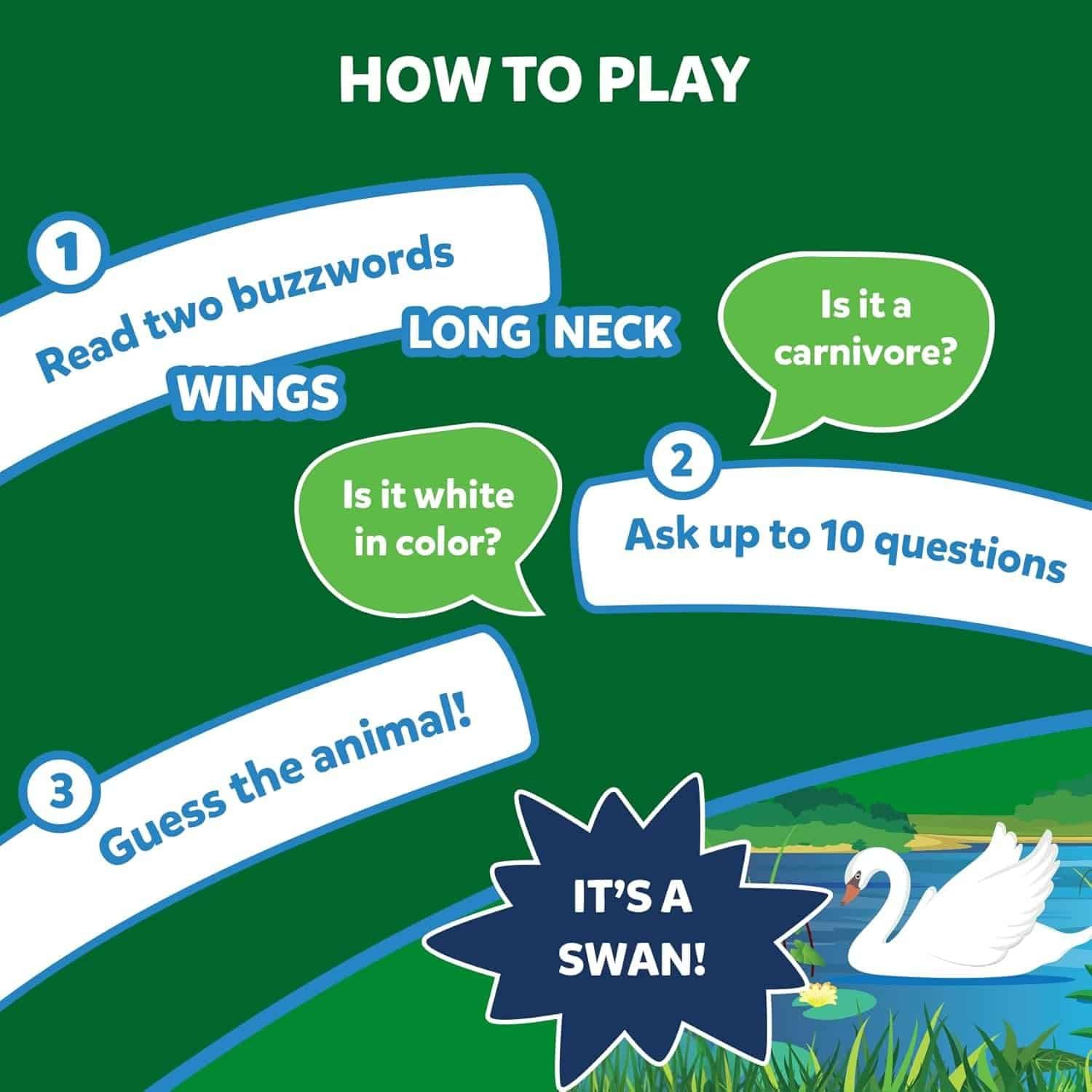
You’ll split into teams or play one-on-one. Each card represents a space-related subject. You get up to 10 questions to narrow it down. Ask smartly, use your clue cards, and aim to collect seven cards before someone else does. There’s strategy, there’s luck, and there’s the kind of smug satisfaction you only get from correctly identifying a nebula relative to your cousin who insists Mars is “definitely habitable.”
How to play (simple enough not to cause arguments)
- Form teams or go head-to-head.
- One player shows a card to their teammate (or keeps it secret in solo play).
- Ask up to 10 yes-or-no questions to figure out what’s on the card.
- Use Clue Cards and Bonus Questions to gain an edge.
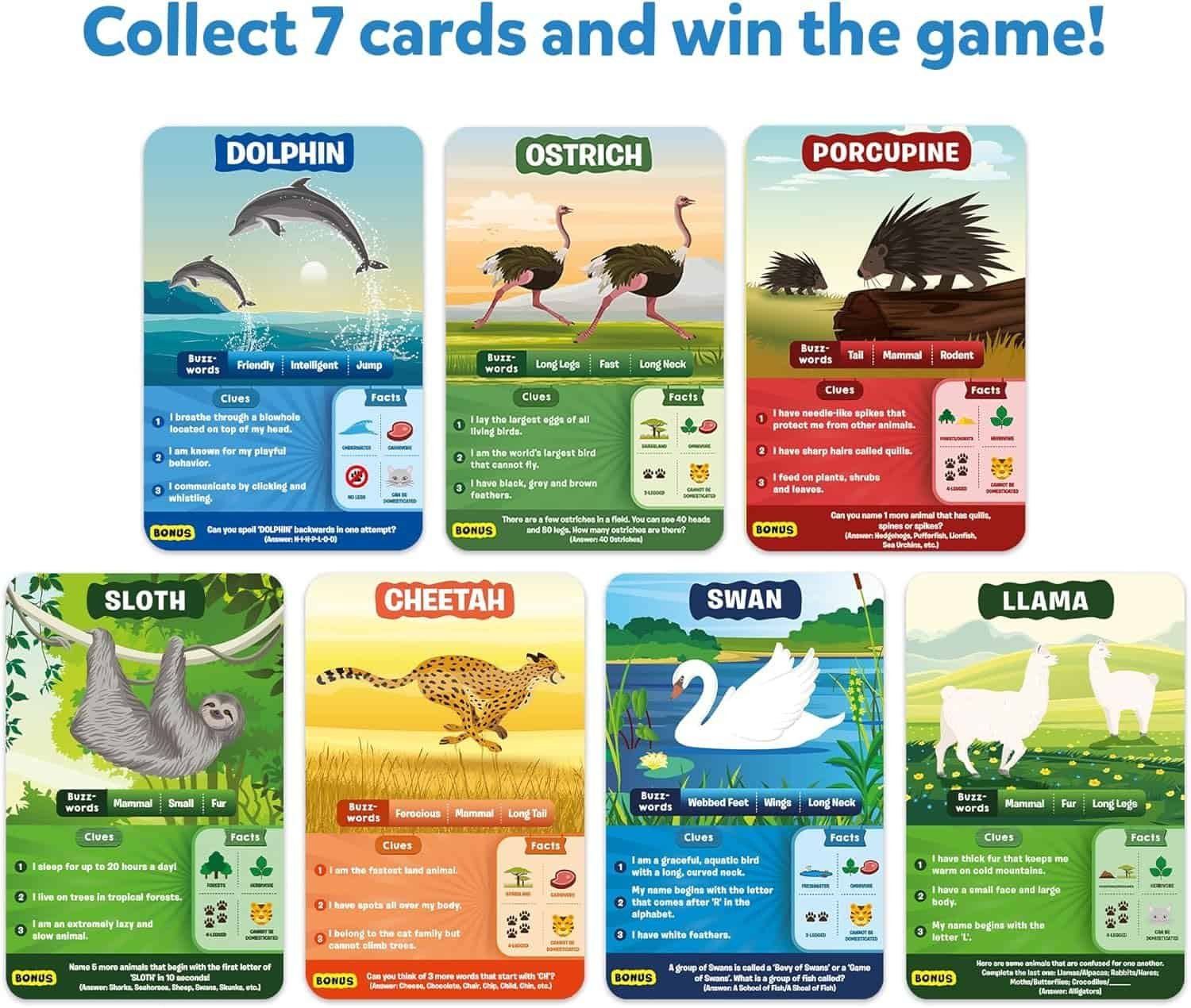
- First player or team to collect 7 cards wins.
It’s quick—about 20 minutes per round—so you can play multiple times until someone grows bored, which may or may not be your spouse.
What’s in the box
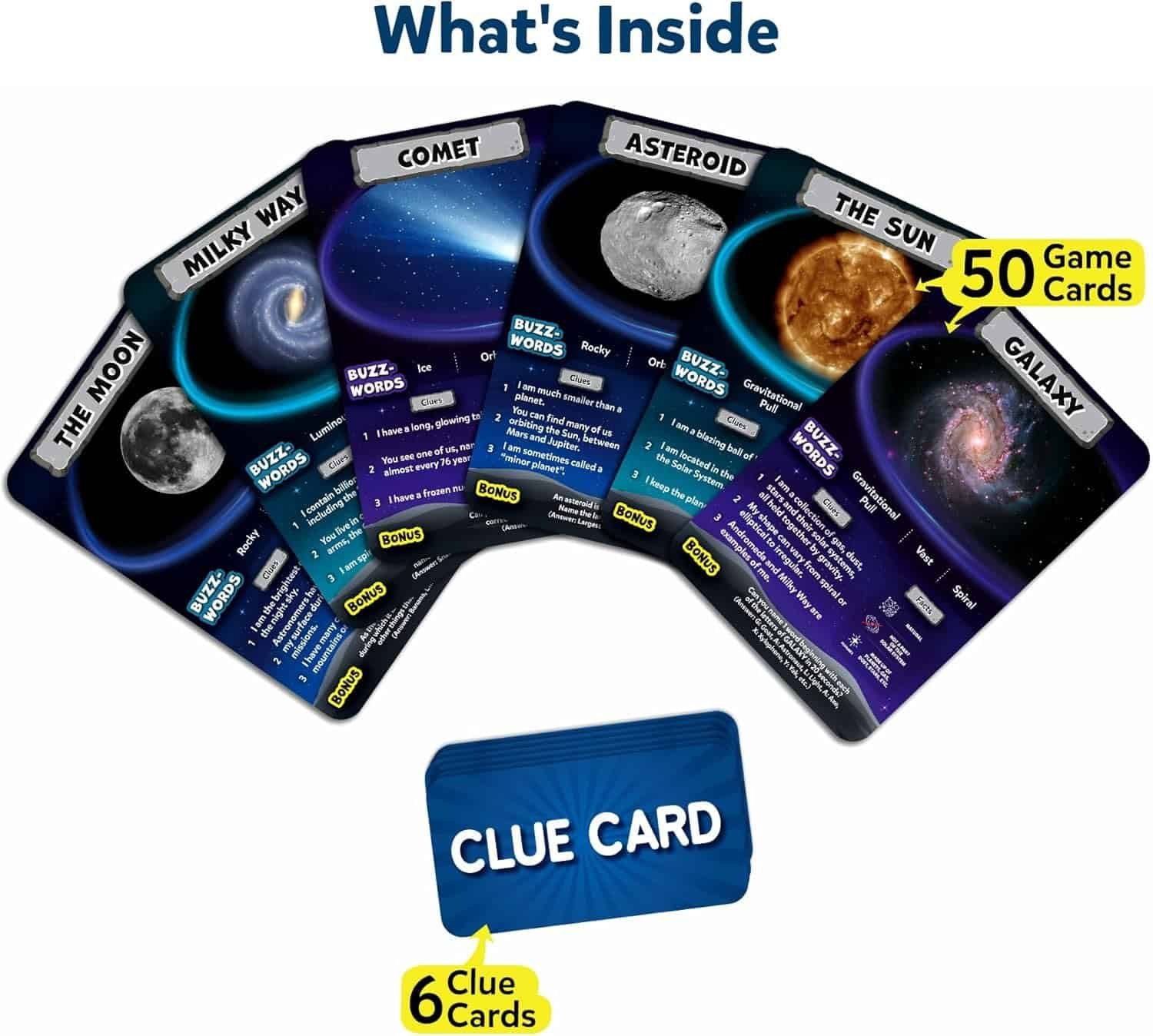
- 50 collectible game cards featuring NASA imagery
- 6 Clue Cards to sharpen your strategy
- Portable box for easy storage and travel
The compact box size means you can bring this on road trips, to restaurants, on planes, or to family gatherings where you’ll need something nostalgic yet brainy to occupy the younger humans.
Product specifications
| Feature | Details |
|---|---|
| Number of players | 2 to 6 players |
| Recommended ages | 8 years and up |
| Game cards | 50 collectible NASA image cards |
| Clue cards | 6 Clue Cards |
| Average playtime | ~20 minutes per round |
| Portable | Yes — compact box for travel |
| Skills promoted | Communication, decision-making, problem-solving, creative thinking |
Why you’ll want this (beyond the obvious)
You’ll want this because it’s a game that makes being curious socially acceptable. Instead of sitting in silence while someone scrolls through social media, you’ll lean in and ask whether the object emits its own light. You’ll coach your siblings and secretly enjoy that they didn’t think to ask about whether it’s in our solar system. There’s tension, there’s teasing, and there’s learning disguised as competitive fun—so even the most reluctant student gets in on it.
If you have kids who roll their eyes at textbooks but will happily watch space videos at midnight, this is a bridge between their attention and actual information. If you’re an adult who likes card games and has a soft spot for starry images, this is an easy way to feel clever without needing to read a manual.
Who it’s made for
- Families with kids aged 8 and up who want meaningful screen-free time
- Teachers and homeschoolers seeking a playful lesson in astronomy
- Space enthusiasts who like trivia and pretty pictures
- Travelers who need compact entertainment for road trips and flights
- Gift-givers hunting for something both educational and entertaining
When and where this fits best
You can play it during game night, at parties, on long car trips, while waiting for takeout, or on a backyard blanket under a real sky. The quick rounds mean it works as filler entertainment between more ambitious board games or as the main attraction for an evening where no one wants to set up a complicated board.
The skills you (and your kids) will gain
This isn’t just about naming planets. You’ll build:
- Communication: You’ll practice asking precise questions.
- Decision-making: You’ll learn to commit to a guess.
- Problem-solving: You’ll narrow down possibilities logically.
- Creative thinking: Clue cards encourage unconventional lines of inquiry.
Parents often report that kids start asking better questions afterward, which is both rewarding and mildly terrifying.
Strategy tips that make you feel like a genius
You don’t need to be an astronomer to win, but a little tactical thought helps:
- Open with broad-category questions (e.g., “Is it a planet or star?”) before narrowing.
- Use Clue Cards early to steer the round in your favor.
- Pay attention to the image style—mission-specific photos can give away context.
- When in doubt, make the guess that forces the opponent to answer an awkward follow-up.
There will be moments when you get it wrong spectacularly. Those moments are part of the fun, and they make the next correct guess that much sweeter.
Perfect for gifting (and for not being re-gifted)
This is an excellent present for the kid who already has a telescope or the friend who quotes astronomy podcasts under their breath. It’s thoughtful without being preachy, educational without being dull. Packaged compactly and dressed with genuine NASA images, it reads like a gift that required forethought but not a small mortgage.
Buy it if you want less screen time and more conversation
If your idea of a good evening includes laughter, gentle rivalry, and the occasional lesson about celestial bodies, this game will slot right into your life. You’ll come away with facts (some of which you’ll use to correct strangers), memories (mostly of your family’s worst guesses), and the satisfying feeling that you’ve entertained and educated with minimal effort.
If you’re ready to add a smart, portable, and charmingly competitive card game to your collection, this will be a small purchase that pays off in repeated rounds of laughter and learning.

Skillmatics Guess in 10 NASA Space, Perfect for Boys, Girls, Kids & Families Who Love Card Games, Educational Toys, Travel Games, Gifts for Ages 8, 9, 10 and Up
Skillmatics Guess in 10 NASA Space, Perfect for Boys, Girls, Kids & Families Who Love Card Games, Educational Toys, Travel Games, Gifts for Ages 8, 9, 10 and Up
You know that moment when your relatives gather and someone produces a game that promises “fun for all ages”? Usually that means you will spend twenty minutes arguing about whether to count Pluto, fifteen minutes consoling Aunt Marge for an incorrect guess, and the rest of the evening pretending you weren’t secretly fascinated by a photograph of Jupiter’s storm. This is different. This is a portable, polite civil war conducted in the name of curiosity, and it comes with actual NASA pictures so you won’t be squinting at clip art and calling it a moon.
What This Game Actually Is
Skillmatics Guess in 10 NASA Space is a fast-paced guessing game that makes you think. You and your opponent(s) get up to ten questions to identify what’s on a card — planets, galaxies, stars, celestial oddities — all represented with stunning NASA imagery. You’ll ask if it’s a planet, whether it emits its own light, or if it’s larger than Earth. You’ll bargain with logic, bluff a little, and sometimes be hilariously wrong. The winner is the first to collect 7 game cards.
How You Play (and How You’ll Argue About It)
- Split into teams or play one-on-one. You choose.
- One player looks at a card, others ask yes/no questions — up to 10 — to narrow it down.
- Use Clue Cards and Bonus Questions to gain the edge; use them poorly and you learn humility.
- Collect 7 cards and you win. Or at least you get to gloat until someone else steals it back.
It’s quick: rounds average about 20 minutes. It fits in a bag, so you’ll find yourself pulling it out in airports, restaurants, and questionable motel lobbies. You’ll be the person who insists on playing while everyone else fumbles for their phone chargers.
What’s in the Box
- 50 collectible game cards with NASA images
- 6 Clue Cards to sharpen your strategy
- Portable storage box so nothing gets left behind in the glove compartment
Product Specs
| Feature | Details |
|---|---|
| Number of Game Cards | 50 collectible cards with NASA imagery |
| Clue Cards | 6 clue cards |
| Players | 2 to 6 |
| Average Playtime | Approximately 20 minutes per round |
| Recommended Ages | 8 years and up |
| Portability | Compact box for travel and storage |
| Educational Focus | Space science, critical thinking, communication skills |
Why You’ll Keep Playing
This is not a one-trick novelty. You’ll return to it because it offers the rare blend of speed and substance. You get the glow of instant gratification from winning a round and the slow burn of learning actual facts. The cards don’t insult your intelligence; they invite it. With each card you’ll trade guesses, refine questions, and, surprisingly, walk away knowing more about the Milky Way than you did before dinner.
The Clue Cards and Bonus Questions are not mere decorations. They force you to plan, to bluff, to conspire with teammates if you want. You’ll employ strategy — or at least convincing posturing — and you’ll see the immediate effect when someone uses a Clue Card to snatch a victory from the jaws of defeat.
Who This Is For
- Families who prefer laughter to polite silence during game night.
- Kids who like space facts and adults who like pretending they’ve always loved space.
- Teachers who want a fun, interactive classroom tool that fosters group discussion.
- Travelers who want a compact, engaging way to pass the time on a long drive.
- People looking for a memorable gift for ages 8 and up — boys, girls, parents, friends, and anyone with a weak spot for planets.
Skills You Build (Without Realizing It)
You won’t notice how much you’re learning because the game is busy being entertaining. Still, it’s worth mentioning:
- Communication: asking precise questions, listening carefully to answers
- Decision-making: choosing which card to risk and when to use a Clue Card
- Problem-solving: narrowing possibilities with logical deduction
- Creative thinking: phrasing questions in clever ways to get to the answer
- Confidence: there’s nothing like correctly identifying an exoplanet to boost your ego at family gatherings
Travel-Friendly and Packable
The compact box means you can toss this in your suitcase, backpack, or that mysterious tote bag. It’s ideal for:
- Road trips where headphone cords are no longer enough
- Airplane flights when in-flight entertainment provides only blurry movies
- Playdates and dinner parties where you want a diversion that doesn’t involve screens
- Picnics where someone brings charcoal and you bring intellect
A Gift That Isn’t Just “Another Thing”
If you worry about buying another toy that’ll end up under the couch, this one’s different. It’s small, shareable, and repeatedly playable. You’re offering moments: debates that end in laughter, the tiny thrill of a correct guess, and perhaps the swelling pride of an 8-year-old who can now explain what the Kuiper Belt is. Gift it for birthdays, holidays, or as a consolation prize when someone loses at Monopoly and needs something less brutal.
Tips to Win (or At Least Make It Entertaining)
- Start broad, then get specific. You’ll thank yourself later.
- Use Clue Cards when you’re stuck, not when you’re cocky.
- Make sure your team knows what “emit its own light” really means; you will argue otherwise.
- If you’re playing with kids, let them ask the first question — it’s entertaining, educational, and can be oddly effective.
- Don’t underestimate the power of a well-timed bluff. It’s not cheating; it’s theater.
Why This Game Fits Your Life
You don’t need to be a space nerd to enjoy this. You just need to like asking questions, enjoying crisp NASA photos, and having a reason to argue with people you love over whether something is a dwarf planet. It’s portable, quick, and just the right amount of competitive. Whether you’re trying to keep a group of children engaged at a birthday party or siphoning energy at a holiday table, this game makes the time pass in a way that leaves everyone slightly smarter and considerably happier.
If you want a game that balances education with entertainment, gives you a reason to use words like “satellite” and “nebula” in casual conversation, and fits in your carry-on, Skillmatics Guess in 10 NASA Space is made for you. Pick it up, open the box, and prepare for the sort of family banter that ends with someone proud and someone sulking — both perfectly normal outcomes.