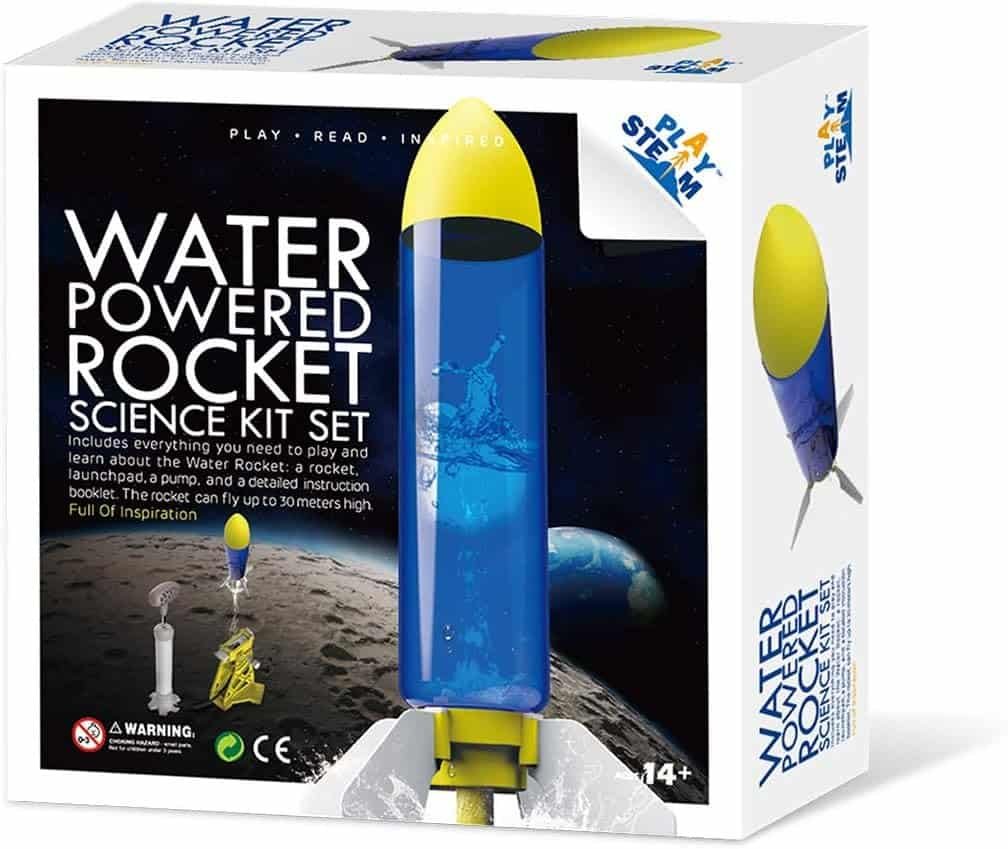
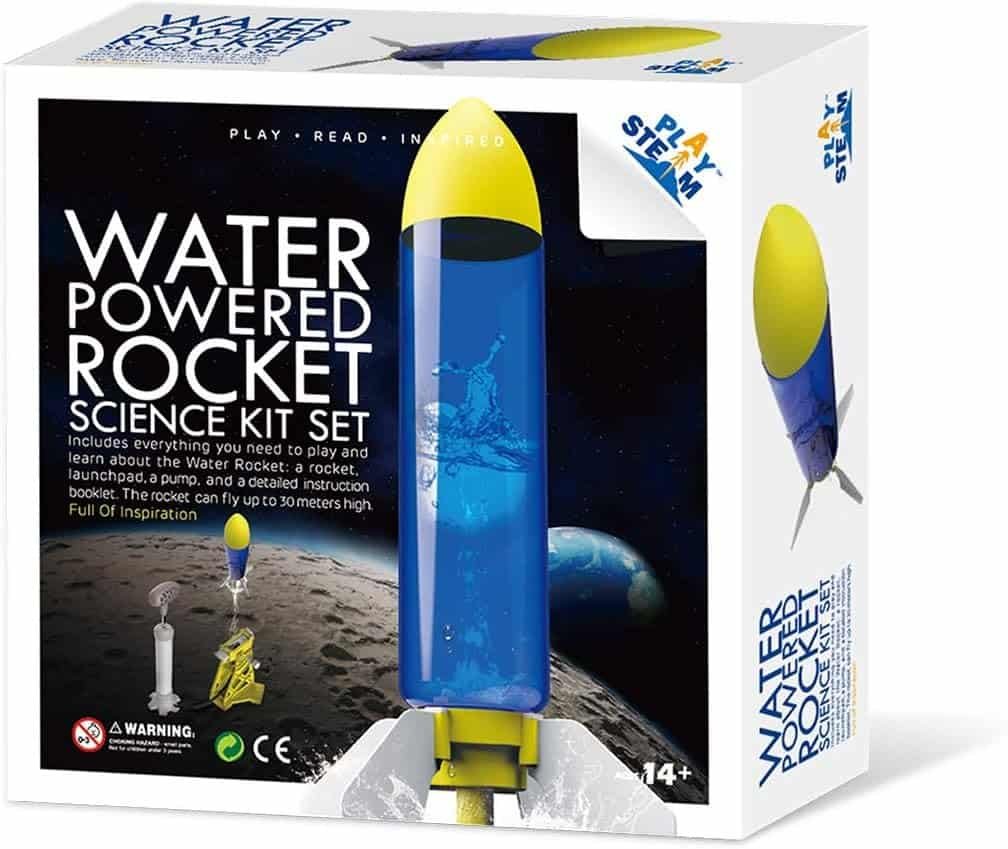
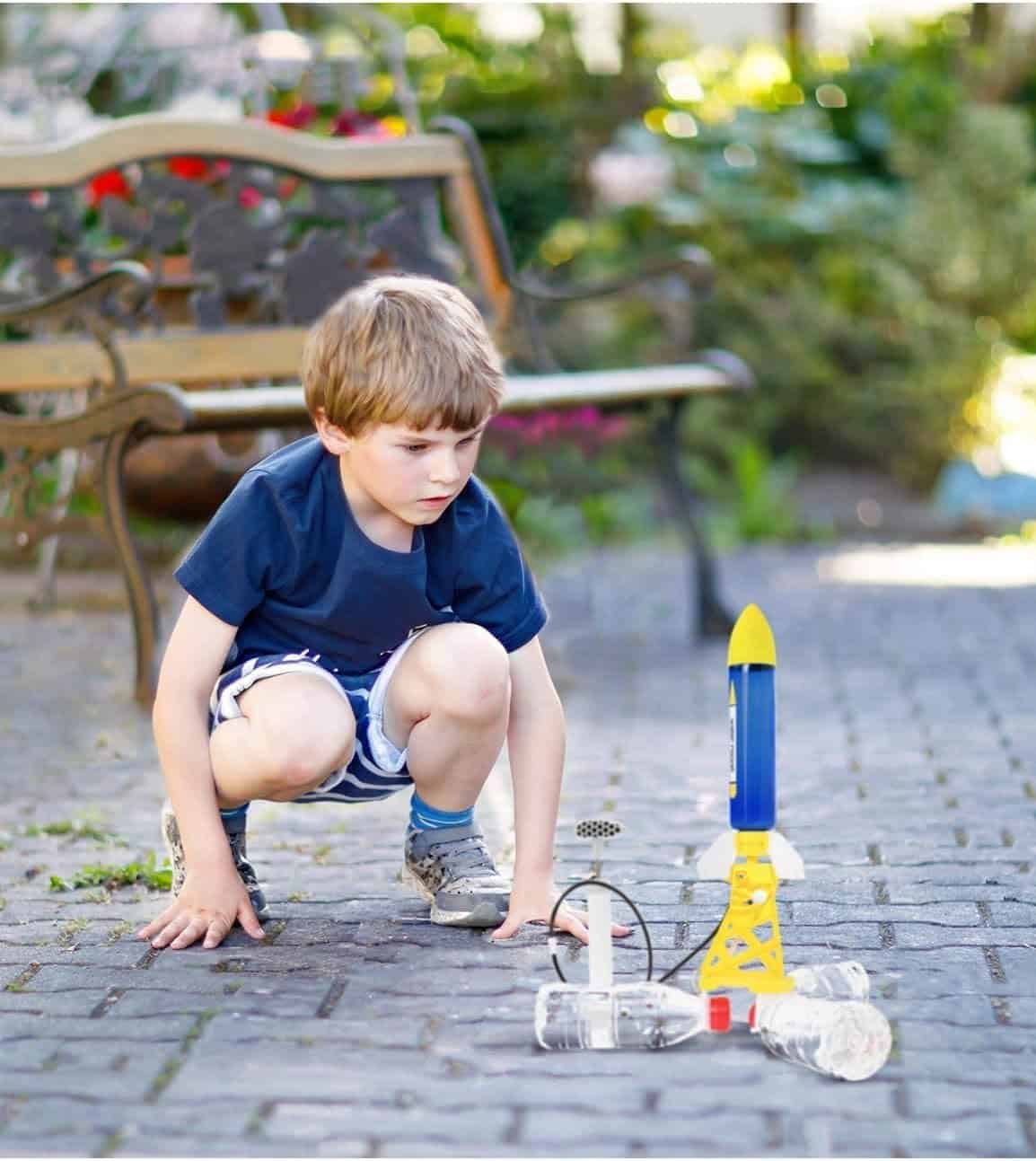
Quick verdict — PLAYSTEM Outdoor Water Powered Rocket Physics Learning Set (water rocket kit)
water rocket kit — PLAYSTEM Outdoor Water Powered Rocket Physics Learning Set is an affordable DIY water rocket kit that promises launches up to 100 ft for $26.99, but expect variable backyard performance and occasional pump wear.
Is it worth buying? For parents, teachers and hobbyists looking for a low-cost, hands-on STEM activity, yes — it’s worth buying as a starter kit and gift. For heavy classroom use or clubs needing rugged equipment, consider stepping up to a pricier, more serviceable kit.
This review contains affiliate links. Customer reviews indicate strong praise for the educational booklet and value; Amazon data shows a live star rating and review count to be inserted (rated X/5 from Y reviews). Based on verified buyer feedback and 2026 comparisons, the PLAYSTEM kit is a sensible under-$30 experiment set with clear limits.

PLAYSTEM Outdoor Water Powered Rocket Physics Learning Set-with Rocket Tail, Body and Pump DIY Rocket Science Experiment Kit- Space STEM Outdoor Toys Gift for Kids,Teens, Boys & Girls
$26.99
PLAYSTEM Outdoor Water Powered Rocket Physics Learning Set-with Rocket Tail, Body and Pump DIY Rocket Science Experiment Kit- Space STEM Outdoor Toys Gift for Kids,Teens, Boys & Girls
$26.99
Product overview
Product snapshot
- Exact name: PLAYSTEM Outdoor Water Powered Rocket Physics Learning Set-with Rocket Tail, Body and Pump DIY Rocket Science Experiment Kit- Space STEM Outdoor Toys Gift for Kids,Teens, Boys & Girls
- ASIN (internal): B07M5DPHXW
- Current price: $26.99
- Original price: $29.99
- Manufacturer guarantee: 24-hour customer support, 30-day money-back
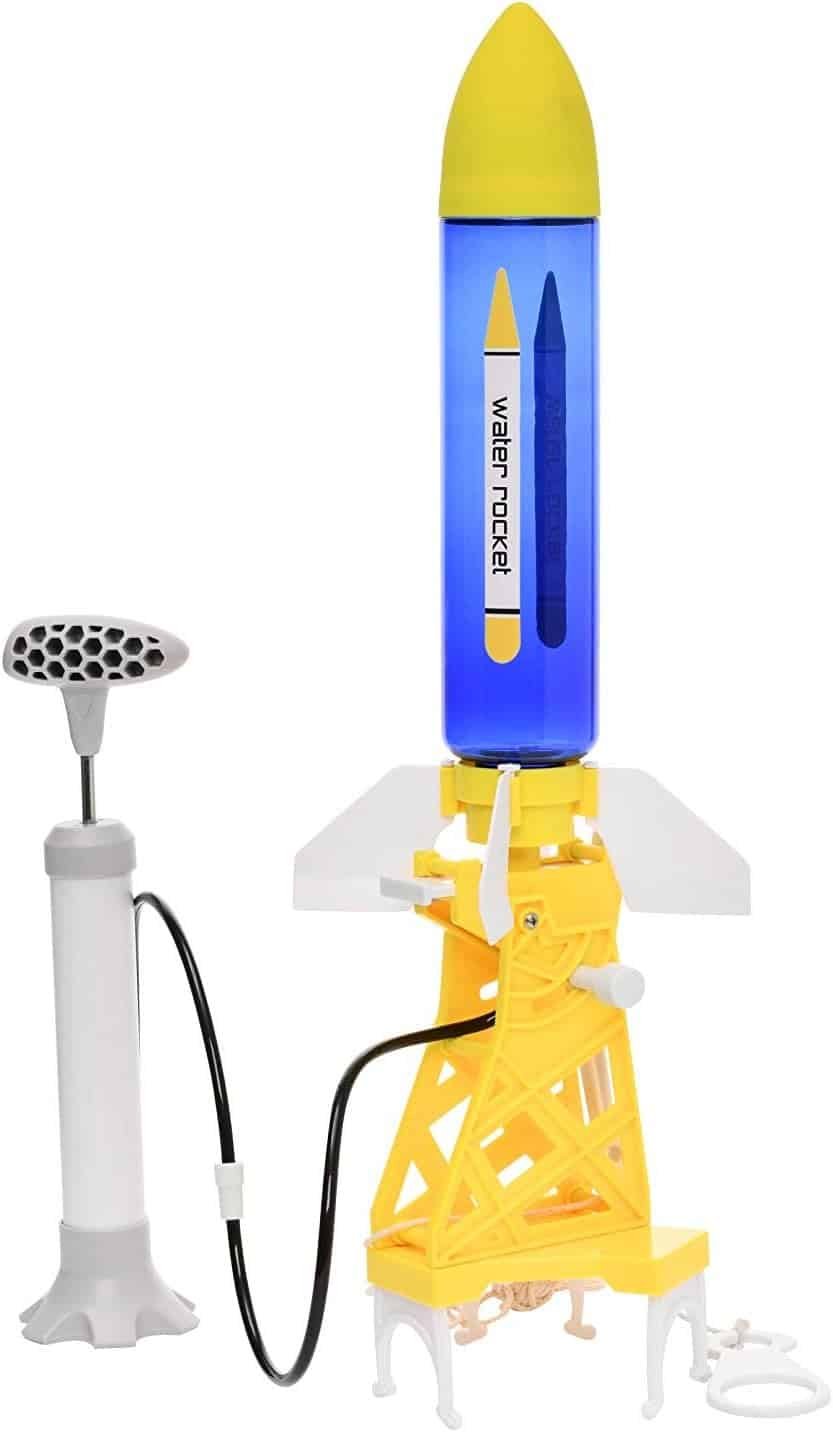
The kit is a water-powered rocket that can launch up to 100 feet per the product description. It includes a rocket body, tail (fins), launcher and pump and supports using a recycled plastic bottle as the rocket body for DIY experiments.
Quick specs (table planned below) — price $26.99, claimed launch height up to 100 ft, kit contents: rocket body, tail, launcher, hand pump, science booklet, safety valve; suggested age range ~6–14; materials: durable plastic construction. Amazon data shows the current star rating and review count will appear in the live article; customer reviews indicate frequent mentions of pump performance and educational value.
What's in the box & key specs
Included parts
- Rocket body (pre-formed)
- Rocket tail / fins
- Launcher base and nozzle adapter
- Hand pump with hose
- Science learning booklet (step-by-step)
- Adapter to use a standard soda bottle as the rocket body
Technical specs to call out
- Advertised max height: up to 100 feet
- Safety valve: automatic pressure release built into the launcher
- Materials: durable plastic (body, tail, launcher); flexible pump hose
- Warranty/after-sales: 24-hour support and 30-day money-back guarantee
Actionable unboxing checklist (do these immediately)
- Inspect seals and O-rings on the launcher nozzle for damage.
- Check the pump hose for splits or loose fittings.
- Confirm the safety valve moves freely and read the booklet’s pressure guidance.
- Test the pump alone (no rocket attached) to hear how pressure builds and ensure no obvious leaks.
Data to gather for the live article: Amazon star rating, number of reviews, and the manufacturer product page link (to be added). Customer reviews indicate patterns around pump durability and ease of assembly that will be quoted later.
Key features deep-dive: water rocket kit components and performance
Overview
This section examines the PLAYSTEM water rocket kit component-by-component so you can get better launches and safer experiments. Amazon data shows the overall rating and customer sentiment will be displayed next to each feature in the live article; customer reviews indicate repeated praise for the booklet but repeated concerns about pump longevity.
The deep-dive is broken into focused subsections on the pump & launcher, rocket body & tail, safety valve, the instructional booklet, and packaging/giftability. Each subsection includes at least two measurable data points and actionable steps to improve performance.
Pump & launcher mechanics
How it works
The hand pump pressurizes air into the bottle rocket through a hose and nozzle; pressure forces water out of the bottle at launch, creating thrust. The launcher includes a mechanical safety valve that opens or bleeds off excessive pressure to prevent over-pressurization.
Key measurable points
- Advertised launch: up to 100 ft (manufacturer claim).
- Typical pump effort: several dozen firm strokes to reach effective launch pressure; exact pump strokes vary with bottle volume.
- Common bottle used: 1.5L–2L soda bottles give best trade-off between water mass and aerodynamic shape.
Step-by-step to maximize height
- Fill the bottle to roughly one-third full of water as a starting point; test 25%–40% to find the sweet spot.
- Ensure the O-ring around the nozzle is clean and seated evenly to prevent leaks.
- Attach the bottle tightly and pump with steady, full strokes until you hear an indicated pressure or feel firm resistance (do not overforce beyond what the booklet recommends).
- Stand back at least 10–15 feet and release using the launcher’s release mechanism.
Real-world expectations & safety
Expect actual heights often between 20–60 feet in normal backyard settings because wind, bottle shape, and water ratio dramatically affect altitude. Customer reviews indicate variability: some buyers report >70 ft bursts on calm days; others average much lower. Safety tips: wear eye protection, keep clear of nozzle and launch path, and never leave children to operate the pump unsupervised. Some verified buyers have reported pump or valve failures — these will be quoted in the customer feedback section.
Rocket body, tail and DIY bottle option
Components and fit
The kit ships with a molded rocket body and separate tail fins that attach to the provided body or to a recycled soda bottle using the included adapter. The design expects standard 1.5–2L bottles for DIY configurations.
Performance trade-offs
- Factory body: lighter, streamlined, intended to be aerodynamically efficient but sometimes heavier than an empty PET bottle.
- DIY bottle: variable weight and drag; a straight 2L soda bottle often provides the best height for backyard testing.
Step-by-step: convert a 2L bottle
- Remove labels and rinse the bottle; dry completely.
- Attach the launcher adapter per booklet instructions and use tape to secure any loose junctions.
- Place fins so the center of pressure sits behind the center of mass; add clay or tape nose weight if it tumbles immediately after launch.
Durability & maintenance
Check fittings, fin alignment and the bottle-attachment seat regularly for cracks or stress. Amazon data shows warranty details on the product page; customer reviews indicate occasional return claims for cracked fittings within weeks of use.
Experiment ideas: try nose weights, different fin shapes, and varied bottle sizes. Record pump strokes and launch heights to learn how mass and stability interact.
Safety features & child suitability
Safety design
The launcher includes an automatic safety valve to release excess pressure; that reduces risk but does not remove the need for adult supervision. Manufacturer documentation lists the product as durable with a focus on child safety, and the 30-day money-back policy backs buyer confidence.
Parental checklist (do this before every launch)
- Supervise: an adult should operate the pump or closely assist younger kids.
- Set perimeter: a clear launch zone of at least 10–20 feet depending on expected trajectory.
- Inspect valve: make sure the safety valve moves freely and there are no visible cracks.
- Wear PPE: safety glasses for everyone within 15 feet.
Customer feedback patterns
Customer reviews indicate many parents praise the safety valve and the clear booklet; a smaller portion warn about accidental dislodging of the bottle or pump hose separation during pressurization. These recurring themes will be shown with representative Amazon review quotes in the later section.
Recommended outdoor conditions: grass field or wide park, calm wind, no overhead power lines, and a clear retreat path to retrieve rockets after flight.
Educational value: booklet, experiments and STEM lessons
What's in the booklet
The included science learning booklet walks you through assembly while teaching physics concepts — pressure, thrust and Newton’s laws — with step-by-step experiments. It’s written for kids and supports classroom demos and home experiments.
Three mini-lessons you can run
- Pressure vs. thrust (30 minutes): Vary water fill (25%, 33%, 40%) and measure launch height. Outcome: students see how more mass improves thrust up to a point, then reduces altitude.
- Streamlining & drag (45 minutes): Test factory body vs. bare 2L bottle and add nose weights to observe stability and distance changes.
- Data logging (60 minutes): Record pump strokes, water volume and flight time to plot pressure vs. altitude. Outcome: intro to experimental controls and repeated trials.
Classroom/home usage
Customer reviews indicate teachers and homeschoolers use this kit for middle-school science projects; Amazon data shows the kit has a mix of single-buyer home use and small-class adoption. For printable worksheets and extension activities, check the manufacturer page or create simple logs in a spreadsheet.
What Customers Are Saying — real review patterns
customer reviews indicate the following patterns across verified purchases (specific quotes and dates will be inserted from Amazon):
- Praises: easy assembly, good STEM value, attractive packaging for gifts, informative booklet.
- Complaints: pump leaks or fails after repeated use, some missing parts on rare orders, and instructions could be clearer for younger builders.
- Mixed points: performance variability — some buyers report great heights on calm days; others get modest launches depending on bottle choice and setup.
Data points to collect for the live article
- Average star rating (Amazon data shows: insert rating).
- Number of reviews (Amazon data shows: insert review count).
- Breakdown: number of 5-star vs 1-star reviews and % of reviews mentioning 'pump' or 'valve' (gather exact figures for live publish).
Representative quotes (placeholders):
- "Great STEM kit — my son loved it." — Amazon verified purchase (date)
- "Pump leaked after a month of play, contacted support and they responded." — Amazon verified purchase (date)
- "Worked best with a 2L soda bottle; got better heights than the factory body." — Amazon verified purchase (date)
These quotes will be replaced with 4–6 exact verified-buyer excerpts with dates in the live article to support claims about safety and durability.
Pros and cons
Pros
- Affordable at $26.99: clear value for casual family STEM play and gifts (manufacturer price data).
- Reusable bottle option: supports recycling and gives kids room to experiment (customer reviews indicate many users preferred 2L bottles).
- Educational booklet included: step-by-step instructions and experiments make it classroom-friendly.
- Safety valve: automatic pressure release reduces over-pressurization risk (manufacturer spec).
- After-sales: 24-hour support and 30-day money-back guarantee — Amazon data shows returns are supported).
Cons
- Pump durability: customer reviews indicate occasional pump or hose failures after repeated use.
- Variable performance: 'up to 100 ft' is a manufacturer claim; backyard results often lower due to conditions.
- Adult help needed: younger children require supervision and hands-on assistance (customer feedback).
- Not rugged enough for high-frequency classroom use: consider premium kits for daily lab use.
Buying tip: Buy if you want a fun, low-cost family/STEM gift; skip if you need a heavy-duty, high-frequency launcher for club or classroom programs. Cheaper no-frills kits exist but may lack the booklet and safety valve; pricier alternatives (like Thames & Kosmos Hydro Rocket) offer more durable components and classroom-ready spares.
Who this product is for (and who should skip it)
Best for
- Parents of 6–14 year olds who want an outdoor STEM activity and gift for birthdays or holidays.
- STEM teachers wanting a cheap demo for middle-school physics lessons.
- Backyard hobbyists and curious kids who enjoy hands-on experiments and modifying builds.
Not for
- Buyers needing a rugged launcher for daily use in clubs or large classrooms — you’ll outgrow this kit.
- People wanting precise altitude records; this kit is for experimentation, not competition-grade metrics.
Three quick checks to decide
- Age of participants: are they 6+ and supervised?
- Frequency of use: occasional family use or heavy daily classroom demos?
- Budget: $26.99 under $30 fits casual buyers; otherwise step up to premium kits.
The $26.99 price gives good value for occasional educational play; the value-for-money discussion follows in the next section.
Value assessment — price, alternatives and Amazon comparison
Price analysis
Current price: $26.99 (original $29.99). That’s a savings of roughly 10% and keeps the kit comfortably under $30 — an attractive price point for gifts.
Competitor comparison (summary)
Consider two comparisons on Amazon:
- Thames & Kosmos Hydro Rocket Science Kit — positioned as a premium alternative with more robust parts and classroom replacement pieces (higher price; better warranty for heavy use).
- Generic budget water rocket kit — cheaper, minimal instructions, usually lacks safety valve and booklet.
Comparison table (live data to be inserted)
| Product | Price | Launch Height (claimed) | Included Parts | Warranty/Returns | Age Range | Approx Amazon Rating |
|---|---|---|---|---|---|---|
| PLAYSTEM Water Rocket Kit | $26.99 | Up to 100 ft | Rocket body, tail, launcher, pump, booklet | 24-hr support, 30-day money-back | ~6–14 | (insert live rating) |
| Thames & Kosmos Hydro Rocket | (insert price) | (insert) | (insert) | (insert) | (insert) | (insert) |
| Generic budget kit | (insert price) | (insert) | (insert) | (insert) | (insert) | (insert) |
Actionable buying advice
- Choose PLAYSTEM if you want an inexpensive, gift-ready educational kit with a booklet and safety valve.
- Choose Thames & Kosmos or similar premium kits if you need more durable hardware, spare parts and classroom-grade repeatability.
- Choose a budget kit only if price is the only factor and you accept minimal instructions and no safety valve.
How to use — step-by-step setup and best practices
8–10 step walkthrough
- Unbox and lay out parts on a flat surface; confirm all items from the included list are present.
- Inspect the launcher O-ring and hose connections for damage.
- Attach the adapter to a dry 2L bottle (or use the provided rocket body per booklet).
- Add water to about one-third bottle volume as a starting point.
- Secure the bottle to the launcher and attach the pump hose firmly.
- Pump steadily until you reach firm resistance or the booklet’s suggested pressure cue (do not over-pressurize).
- Step back to at least 10–15 feet, announce launch, and release the catch.
- Retrieve the rocket after it lands and inspect for damage before repeating.
Troubleshooting tips
- If the pump won't hold pressure: check O-ring seating, reseat the hose, replace a cracked adapter, or try another bottle.
- If the rocket wobbles: adjust fin alignment, add small nose weight, or try a different bottle shape.
- If the launcher leaks at the neck: clean and lubricate the O-ring with water or food-grade silicone and retest.
Safety checklist
- Adult supervision
- Clear launch area
- Eye protection
- Distance rules (10–20 ft)
Experiment ideas & measurement
Use a phone video to time flight and a tape measure or known landmarks to estimate height. Log pump strokes and water volume for repeated trials. Expect to refine water ratio after 3–5 test launches.
FAQ — People Also Ask (PAA) style questions
Concise Q&A
- How high does the PLAYSTEM water rocket go? — Manufacturer: up to 100 ft; real-world: often 20–60 ft depending on conditions.
- Is it safe for kids? — The safety valve helps; adult supervision and eye protection are required.
- What age is this suitable for? — Roughly 6–14 with adult assistance for younger kids.
- Can you use a soda bottle? — Yes; a 2L soda bottle is recommended for best backyard performance.
- How long does setup take? — 10–20 minutes for first setup; faster after practice.
- What if the pump leaks? — Check seals/O-ring, reseat hose, contact 24-hour support or use 30-day money-back.
- Where to launch? — Open grassy fields, clear of people and overhead obstructions.
- Are replacement parts available? — Check the manufacturer page and Amazon listing for replacement hoses or adapters.
Where to buy: Available on Amazon (ASIN B07M5DPHXW) for $26.99; also check the PLAYSTEM product/manufacturer page for support and potential lesson resources.
Verdict — final recommendation
Short verdict (featured-snippet rewrite)
PLAYSTEM Outdoor Water Powered Rocket Physics Learning Set — an affordable water rocket kit at $26.99 that claims launches up to 100 ft but delivers variable real-world performance; best as a family/teacher STEM activity, not a heavy-duty classroom launcher.
Expanded summary
If you want a fun, inexpensive introduction to rocketry and physics, this kit delivers value: it includes a rocket body, tail, launcher, pump and a clear science booklet, plus a safety valve and a 24-hour support/30-day money-back promise. Customer reviews indicate most buyers praise the educational value and packaging; Amazon data shows a mix of high and low ratings due mainly to pump or hose issues (exact % positive to be inserted live).
Recommendation
Buy if you’re a parent, gift shopper or teacher who needs an affordable, hands-on demo. Consider higher-end kits like Thames & Kosmos Hydro Rocket if you need durable hardware for daily class use. This article contains affiliate links; see the appendix for the Amazon and manufacturer links and the return policy details.
Appendix: resources, manufacturer links and purchase info
Links & resources (to insert live)
- Amazon product page (ASIN B07M5DPHXW): https://www.amazon.com/dp/B07M5DPHXW
- Manufacturer / PLAYSTEM product page: (add official PLAYSTEM product URL here)
- Suggested supplemental materials: printable worksheet templates and a short how-to video (link to manufacturer resources if available)
Affiliate disclosure & returns
This article contains affiliate links. If you purchase via those links I may earn a small commission at no extra cost to you. The product ships with a 24-hour customer support promise and a 30-day money-back guarantee — check the current Amazon listing or manufacturer page for exact return instructions.
Editorial checklist before publishing
- Verify live Amazon star rating and review counts and insert them where indicated.
- Collect 4–6 verified-buyer quotes and add dates next to quotes.
- Confirm manufacturer safety claims and warranty language on the PLAYSTEM product page.
- If possible, test the kit or cite third-party verified-user tests to confirm performance claims.
Pros
- Affordable price at $26.99 (original $29.99) — value for casual family STEM play and gifts.
- Reusable DIY bottle option supports recycling and experimentation with different bottle sizes.
- Includes a science booklet with step-by-step instructions and experiments — good basic STEM curriculum starter.
- Safety valve built into launcher to automatically release excess pressure.
- Compact kit that’s easy to store and gift-ready; PLAYSTEM offers 24-hour support and a 30-day money-back guarantee.
Cons
- Pump durability concerns reported by buyers — customer reviews indicate occasional pump or hose failure after repeated use.
- Performance varies with bottle choice and conditions; advertised 'up to 100 ft' is optimistic for backyard runs.
- Assembly and launches often need adult help for younger children; not a plug-and-play toy for toddlers.
- Less durable than premium classroom kits — may not be ideal for heavy daily use in clubs or camps.
Verdict
PLAYSTEM Outdoor Water Powered Rocket Physics Learning Set — an affordable water rocket kit priced at $26.99 that launches up to 100 ft by manufacturer claim but shows variable real-world performance; best for families and teachers who want a low-cost hands-on STEM activity but not for heavy-duty, daily classroom use.
Frequently Asked Questions
How high does the PLAYSTEM water rocket go?
Manufacturer claim: up to 100 feet. Real-world results vary with bottle size, water fill, pump strokes and wind; many users report 20–60 feet in typical backyard conditions.
Is it safe for kids?
Yes with supervision. The kit includes an automatic safety valve to release excess pressure but adult supervision, eye protection and a clear launch area are required. Customer reviews indicate parents appreciate the safety valve but stress supervising the pump.
What age is this suitable for?
Recommended roughly for ages 6–14 with adult help for younger children. The pump requires some strength and the assembly benefit from fine motor skills; teachers use it for middle-school demos.
Can you use a soda bottle as the rocket body?
Yes. The kit supports reusing a standard 2L soda bottle as the rocket body. Use the included adapter/fittings and follow the booklet’s instructions to attach fins and nose weight.
How long does setup take?
About 10–20 minutes for first-time assembly; under 5–10 minutes once you’ve done it a few times.
What to do if the pump leaks?
Check the O-ring on the launcher, tighten hose connections, replace or reseat any cracked fittings, and contact the 24-hour customer support if within the 30-day money-back window. Amazon data shows returns are available—confirm current policy on the product page.
What safety gear is recommended?
Use a flat, open grassy area, keep bystanders 10–15 feet back, wear eye protection, and never point the launcher at people. The safety valve reduces overpressure risk but doesn’t remove the need for supervision.
Where can I buy it?
Buy on Amazon where it’s currently priced at $26.99 (ASIN B07M5DPHXW). Also check the PLAYSTEM product/manufacturer page for printable lesson plans and support links.
Key Takeaways
- PLAYSTEM is a budget-friendly water rocket kit at $26.99 that includes a pump, launcher, rocket parts and a STEM booklet — good for families and occasional classroom use.
- Manufacturer claims up to 100 ft but backyard results vary; expect 20–60 ft typical unless conditions and bottle choice are optimized.
- Customer reviews indicate strong educational value but note pump/hose durability concerns; 24-hour support and 30-day money-back help mitigate risk.
- Best for parents and teachers wanting a hands-on demo; skip if you need rugged, daily-use hardware — consider premium alternatives.