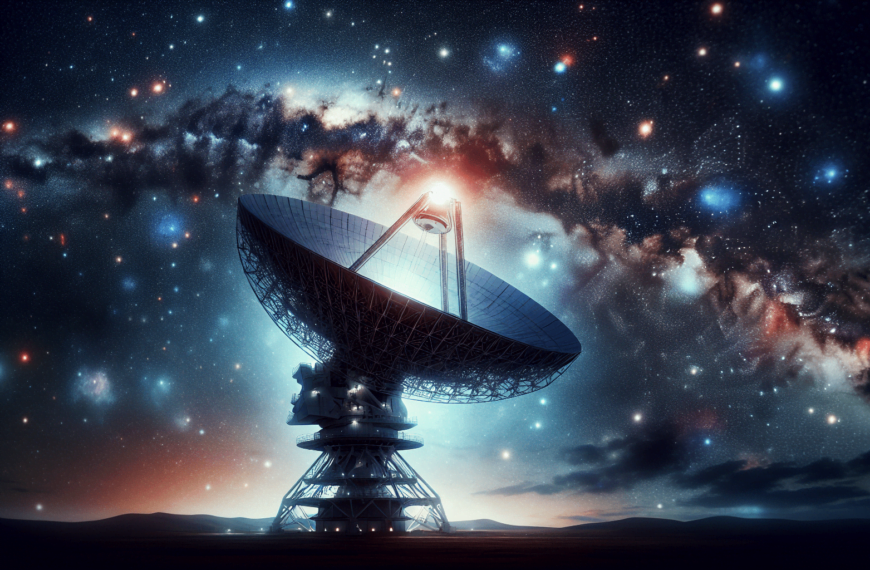

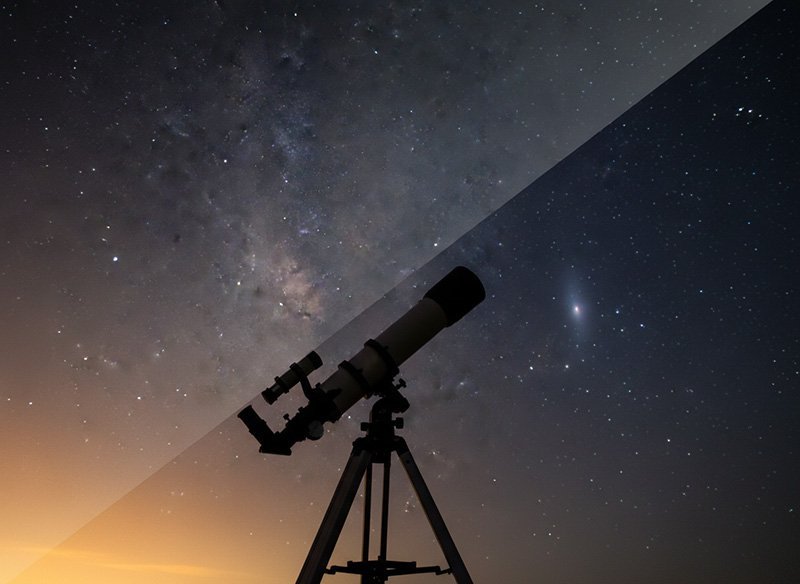
Seeing galaxies is less about “power” and more about light. A beginner telescope can show galaxies, but your sky darkness and expectations matter just as much as the telescope itself.
Aperture matters because it collects light. More collected light generally makes faint objects easier to detect. But even a large telescope can struggle under heavy light pollution, because the background sky becomes bright and washes out subtle targets.
That’s why sky darkness matters so much. If you can occasionally travel to darker skies, even a modest setup can feel dramatically more powerful. If you can’t travel, you can still observe brighter galaxies and enjoy learning the sky, but you’ll want to keep expectations realistic.
Visually, galaxies often look like faint, soft shapes. You’re not doing anything wrong if you don’t see spiral arms immediately. The experience is still meaningful because you’re seeing real photons from distant star systems.
For beginners, the best choice is usually a telescope that is stable, easy to point, and bright enough to be rewarding. Consistent use beats theoretical maximum performance.