
This comprehensive telescope buying guide helps astronomy enthusiasts select the perfect telescope based on experience level, budget, and stargazing goals—turning curiosity about the cosmos into an unforgettable viewing experience.
Contents
- Understanding telescope types and their best use cases for beginners
- Key specifications that matter: aperture, focal length, and magnification explained
- Budget considerations and value recommendations for first-time telescope buyers
- Matching telescope features to your specific astronomy interests
- Essential accessories and setup tips for successful stargazing
Understanding Your Telescope Options: Types and Technologies

When I help customers choose their first telescope, the most common question is: “Which telescope type is best for beginners?” The answer depends on what you want to observe and how you plan to use your telescope.
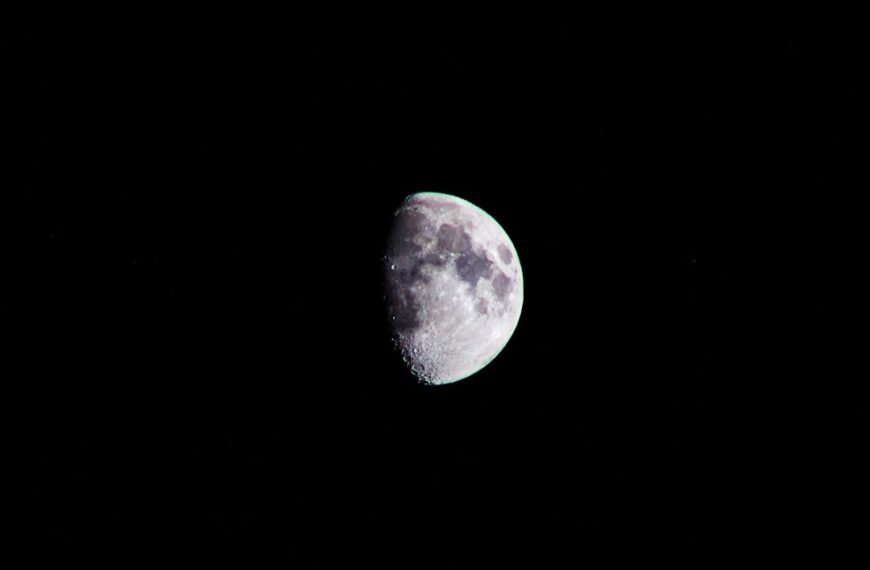
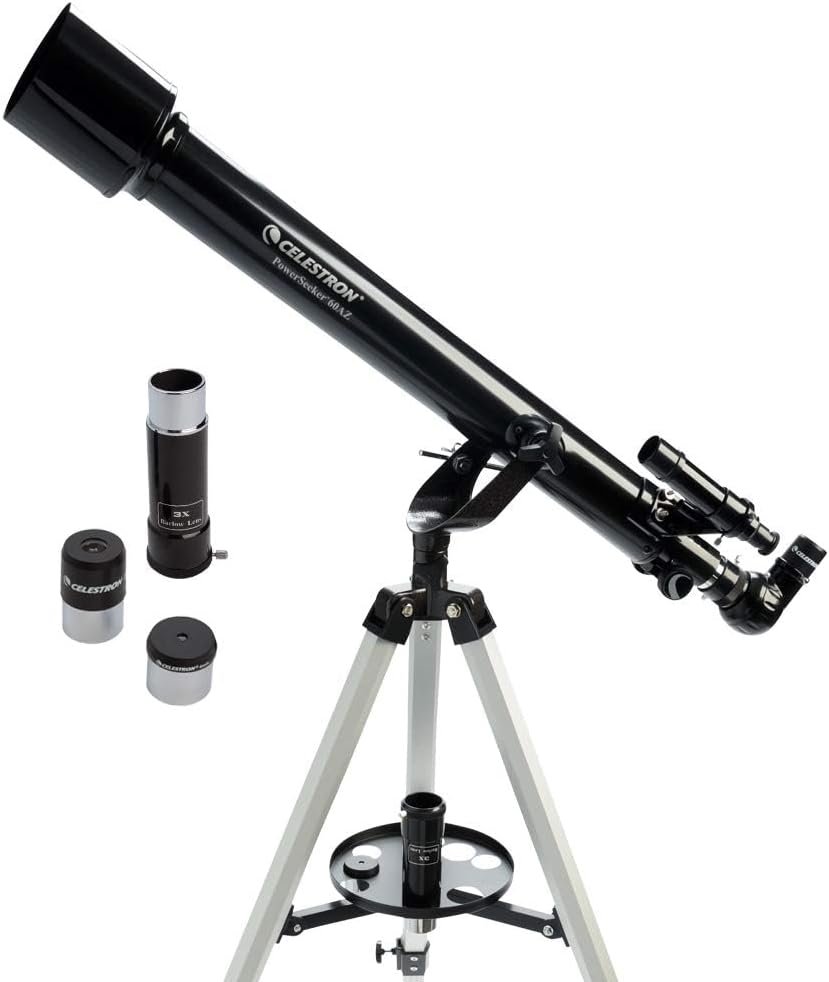
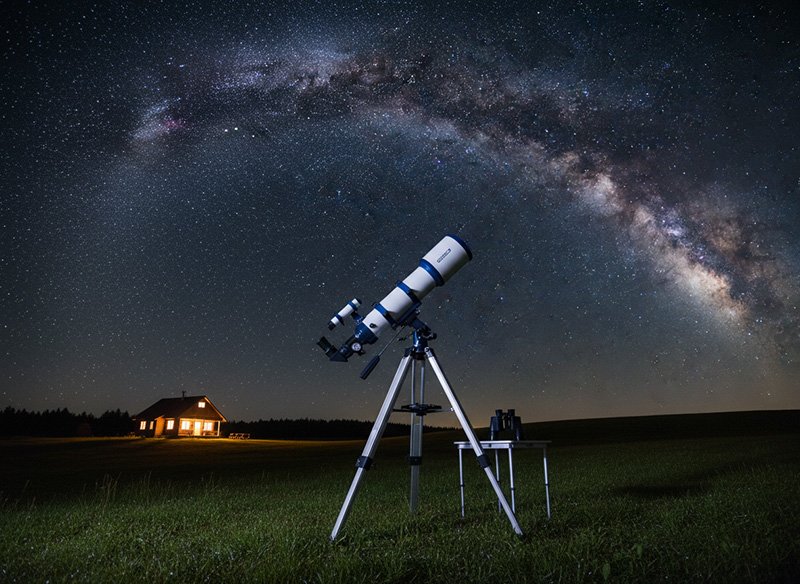
Refractor Telescopes use lenses to gather light and are excellent for planetary observation and lunar details. These telescopes require minimal maintenance and provide crisp, high-contrast images of the Moon, Jupiter’s moons, and Saturn’s rings. For beginners interested in planetary astronomy, a 70mm to 90mm aperture refractor telescope offers an ideal entry point.
Reflector Telescopes use mirrors instead of lenses, providing more aperture per dollar—crucial for observing faint deep-sky objects like nebulae and galaxies. A 114mm or 130mm Newtonian reflector telescope gives beginners impressive views of the Orion Nebula, Andromeda Galaxy, and star clusters at an affordable price point.
Compound Telescopes (Schmidt-Cassegrain or Maksutov-Cassegrain) combine lenses and mirrors in a compact design. While typically more expensive, these versatile telescopes excel at both planetary and deep-sky observation, making them ideal for serious beginners who want one telescope for all astronomy pursuits.
My reasoning: Most customers starting their astronomy journey need to understand that there’s no single “best” telescope—only the best telescope for their specific interests and circumstances.
Decoding Telescope Specifications: What Actually Matters
Through years of helping space enthusiasts, I’ve learned that telescope specifications can be overwhelming. Let me break down what truly impacts your stargazing experience.
Aperture is King: The aperture (diameter of the main lens or mirror) determines how much light your telescope gathers. More light means you can see fainter objects and finer details. A telescope with 70mm aperture gathers 100 times more light than your naked eye, while a 130mm aperture gathers 345 times more light. For deep-sky observation, prioritize aperture over magnification.
Focal Length and Focal Ratio: The focal length affects magnification and field of view. A longer focal length (f/10 to f/15) provides higher magnification ideal for planetary observation, while shorter focal lengths (f/4 to f/6) offer wider fields of view perfect for scanning star fields and large nebulae.
Magnification Myths: Many beginner telescopes advertise “500x magnification!” as a selling point, but this is misleading. Useful magnification is limited by aperture—roughly 50x per inch of aperture. A 70mm (2.75-inch) telescope realistically provides about 140x useful magnification. Beyond this, images become dim and blurry.
Mount Stability: An often-overlooked specification is the mount quality. Even the best optical system is frustrating on a shaky mount. Equatorial mounts track celestial objects as Earth rotates, while alt-azimuth mounts offer simpler, intuitive up-down-left-right movement ideal for beginners.
Why this matters: I emphasize these specifications because customers often purchase telescopes based on magnification claims, then feel disappointed when images don’t meet expectations. Understanding aperture and mount quality leads to much higher satisfaction.
Budget-Conscious Telescope Recommendations
Based on customer feedback and astronomical performance, here’s how I guide telescope buyers across different budget ranges.
Under $200 – Starting Your Journey: At this price point, a 70mm refractor telescope or 114mm tabletop reflector telescope provides genuine astronomical views. You’ll see lunar craters, Jupiter’s cloud bands and four largest moons, Saturn’s rings, and brighter deep-sky objects like the Orion Nebula. These telescopes teach fundamental astronomy skills without overwhelming investment.
$200-$500 – Serious Beginner Territory: This range offers 90mm to 102mm refractor telescopes or 130mm to 150mm reflector telescopes on stable mounts. The increased aperture reveals significantly more detail—Cassini Division in Saturn’s rings, cloud features on Jupiter, and dozens of deep-sky objects. Many customers find this sweet spot between affordability and capability.
$500-$1000 – Enthusiast-Grade Equipment: Here you’ll find quality 6-inch to 8-inch reflector telescopes, advanced refractors, or entry-level compound telescopes. These instruments provide views approaching what you see in astronomy magazines, with enough aperture to observe hundreds of deep-sky objects and planetary details that inspire awe.
Investment Considerations: I always remind customers that a telescope is a long-term investment in education and wonder. A quality $400 telescope used regularly provides more value than a $800 telescope that sits unused because it’s too complex. Start with equipment matching your current commitment level—you can always upgrade as your skills and passion grow.
Matching Telescopes to Your Astronomy Interests
 planet in stunning detail.” class=”wp-image-22963″/>
Different celestial objects require different telescope characteristics. Here’s how I help customers align their equipment with their interests.
Planetary Observers: If you’re fascinated by Mars, Jupiter, and Saturn, prioritize longer focal length telescopes (f/10 or higher) with good optical quality. Refractor telescopes and compound telescopes excel here, providing sharp, high-contrast images at higher magnifications. A 90mm refractor telescope reveals impressive planetary detail.
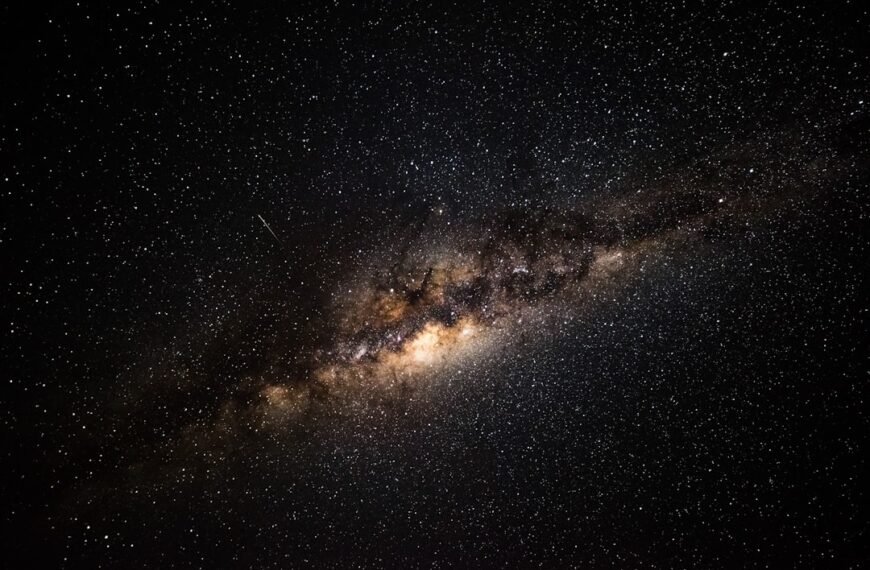
Deep-Sky Enthusiasts: For those drawn to nebulae, galaxies, and star clusters, aperture is everything. Reflector telescopes offer the most aperture per dollar. A 6-inch or 8-inch Dobsonian telescope (a simple but effective reflector design) opens up the deep-sky universe, revealing structure in galaxies and color hints in bright nebulae.
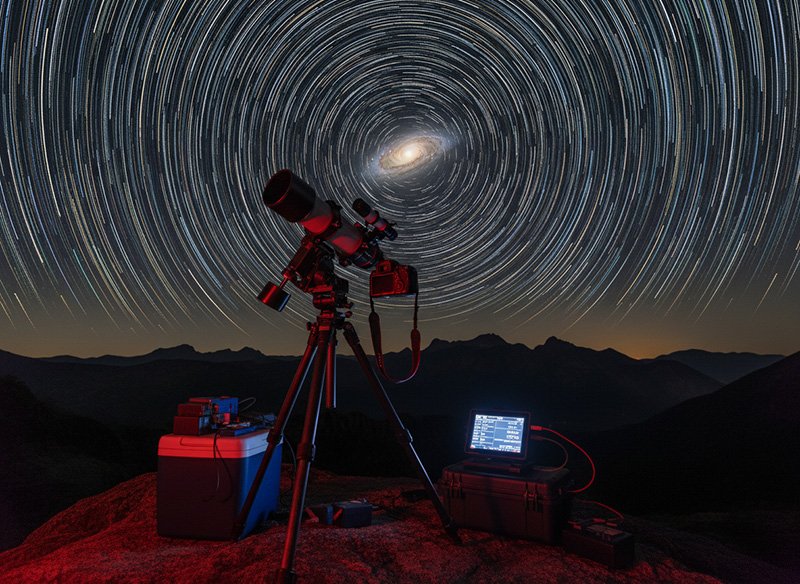
Astrophotography Aspirants: If you plan to photograph celestial objects, you’ll need a telescope with a sturdy equatorial mount and motor drive for tracking. Compound telescopes or refractor telescopes designed for imaging work best. However, I typically recommend beginners master visual observation first before investing in astrophotography equipment.
Portable Stargazers: For customers who plan to travel to dark-sky sites, portability matters. Compact refractor telescopes (70-80mm) or tabletop reflector telescopes balance performance with transportability. Remember: the best telescope is the one you’ll actually use, and a lighter telescope gets used more often.
All-Around Explorers: Many beginners want to observe everything—planets, Moon, deep-sky objects. For this versatility, I recommend a 5-inch to 6-inch compound telescope or a 130-150mm reflector telescope on a good mount. These provide enough aperture for deep-sky objects while maintaining the focal length for planetary detail.
Essential Accessories and Setup Success
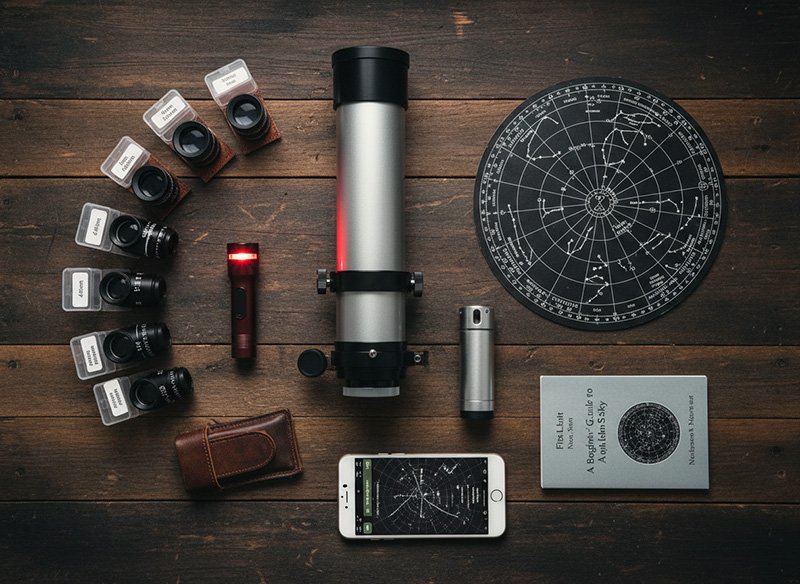
A telescope alone doesn’t guarantee great stargazing experiences. Here are the accessories and knowledge I share with every customer.
Eyepieces Expand Capability: Most telescopes include basic eyepieces, but adding a quality wide-angle eyepiece (20-25mm) and a planetary eyepiece (6-9mm) dramatically improves your experience. Eyepieces determine your actual magnification and field of view.
Red Flashlight for Night Vision: Your eyes need 20-30 minutes to fully adapt to darkness. A red LED flashlight lets you read star charts and adjust equipment without destroying your night vision—essential for finding faint deep-sky objects.
Star Charts and Apps: Even the best telescope is useless if you can’t find objects. I recommend beginners start with simple star charts or astronomy apps like SkySafari or Stellarium. Learning the night sky is part of the journey and makes every observation more meaningful.
Collimation Tools: Reflector telescopes require occasional alignment (collimation) of their mirrors. A simple collimation tool ensures optimal performance. This maintenance is straightforward once learned and keeps your telescope performing at its best.
Realistic Expectations: I always set honest expectations with customers. Telescopes show real astronomical objects, not the colorful images from space telescopes like Hubble. Saturn really does have rings, Jupiter really shows cloud bands, and galaxies appear as subtle smudges of light—but these are REAL objects millions or billions of light-years away that you’re seeing with your own eyes. That connection to the cosmos is profound.
Conclusion
Choosing your first telescope is an exciting step into astronomy, and the right choice depends on your specific interests, budget, and commitment level. Through helping hundreds of space enthusiasts begin their stargazing journey, I’ve learned that success comes from matching telescope capabilities to realistic expectations and genuine interests.
Key Takeaways:
- Prioritize aperture over magnification claims for better viewing experiences
- Match telescope type to your primary interests (planetary vs. deep-sky observation)
- Invest in stable mounts—they’re as important as optical quality
- Start with equipment matching your current commitment level
- Remember that learning the night sky is part of the rewarding journey
Whether you choose a compact 70mm refractor telescope for lunar and planetary observation, a light-gathering 130mm reflector telescope for deep-sky exploration, or a versatile compound telescope for all-around astronomy, the most important factor is that you’ll use it regularly.
The universe is waiting to reveal its wonders—from the ancient light of distant galaxies to the dynamic storms on Jupiter. Your first telescope opens a window to cosmic understanding that combines science education with philosophical wonder about our place in the vast universe.
Ready to begin your astronomical journey? Consider what celestial objects inspire you most, set a realistic budget, and choose the telescope that matches your stargazing goals. Clear skies await, and every observation brings new discoveries about the universe episodes unfolding above us each night.