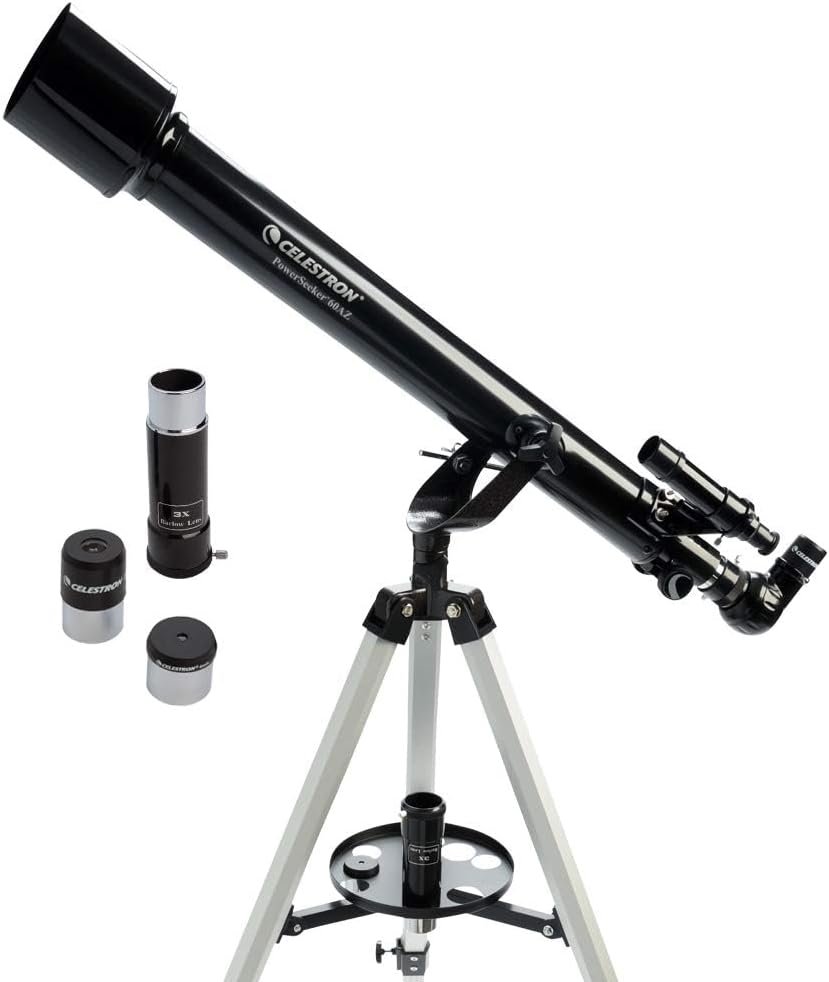


Many beginners feel disappointed when they first try to observe planets. This usually comes from unrealistic expectations or from using unstable, hard-to-use equipment. When you choose a telescope that is steady, bright, and simple to operate, planet observing becomes one of the most rewarding things you can do from your own backyard.
Mistake 1: Buying a Telescope Only for Magnification
High magnification sounds appealing, but it is not the most important factor. The usable magnification of a telescope is limited by the quality of its optics and by Earth’s atmosphere. On many nights, the air is too unstable for very high power to look sharp. A clear and steady image at moderate magnification will always be more enjoyable than a blurry, shaking image at extreme magnification.
Mistake 2: Ignoring Mount Stability
A weak or shaky mount can ruin an otherwise good telescope. When the mount vibrates, focusing becomes frustrating and fine details disappear. Stability is not a luxury feature. It is essential for seeing detail on planets and for enjoying the experience instead of fighting the equipment.
Mistake 3: Expecting Photo-Quality Views
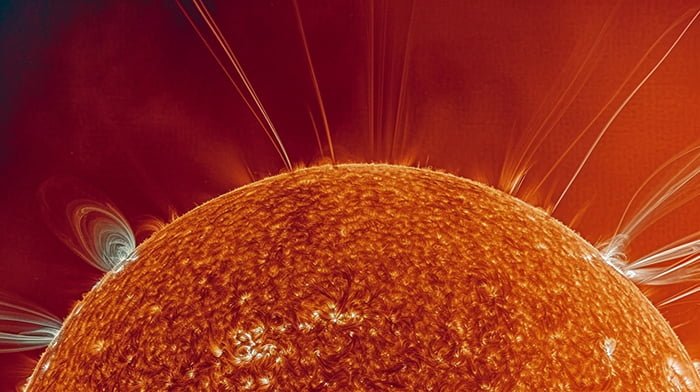
Planetary views through a telescope do not look like NASA images or pictures you see online. Visual astronomy is more subtle. You will not see vivid colors, but you will see real structure. Jupiter’s moons line up clearly, Saturn’s rings are distinct, and shadows inside lunar craters create striking contrast.
Mistake 4: Choosing Something Too Complicated
The best telescope is the one you actually use. If setting up your telescope feels like a hassle, it will stay indoors. Simple designs that are quick to assemble and easy to point often get used far more often than complex systems, especially for beginners.
Mistake 5: Not Matching the Telescope to Your Sky and Goals
Light pollution affects deep-sky objects much more than it affects planets. This means planetary observing can still be very satisfying even in urban areas. When choosing a telescope for planets, prioritize stability, ease of use, and good optics rather than worrying too much about city lights.
Final Thought
Choosing the right telescope for planets is less about chasing extreme specifications and more about balance. A steady mount, clear optics, and simple setup will give you better results and more enjoyment than a complicated telescope that promises too much.