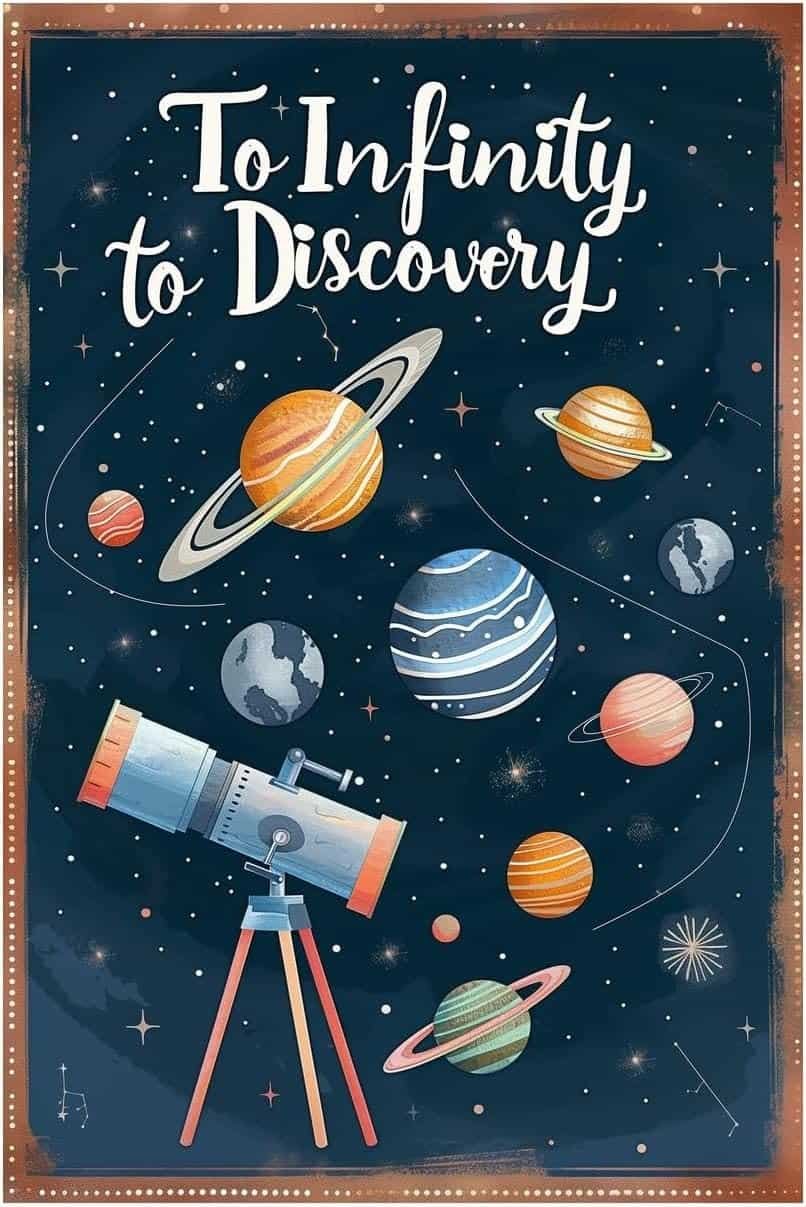


How to Choose Your First Telescope
Many beginners interested in astronomy quickly run into the same question: Which telescope should I buy?
With so many models, specifications, and marketing claims, the process can feel confusing. This guide breaks things down into practical steps, helping you choose a first telescope based on your goals, environment, and budget.
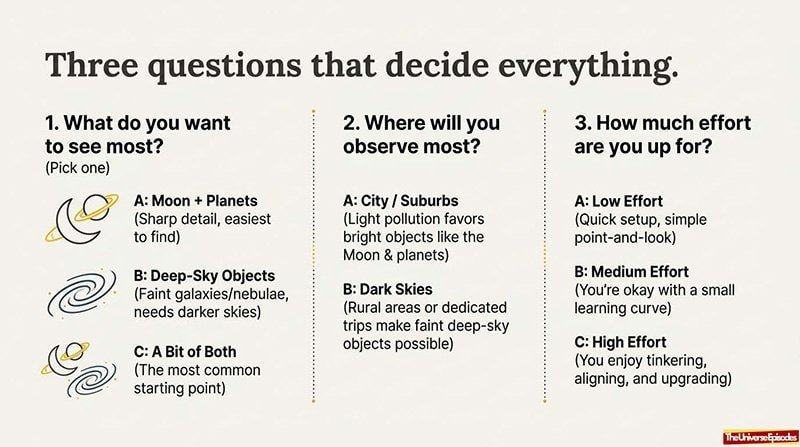
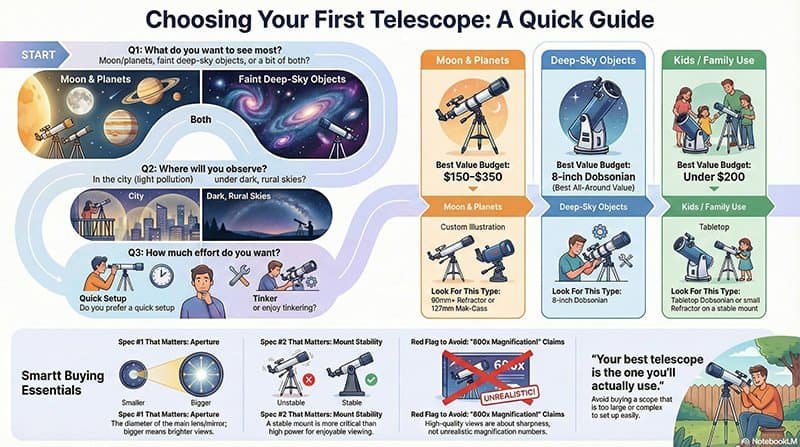
1. Start with Your Observing Goals
The most important question is what you want to observe.
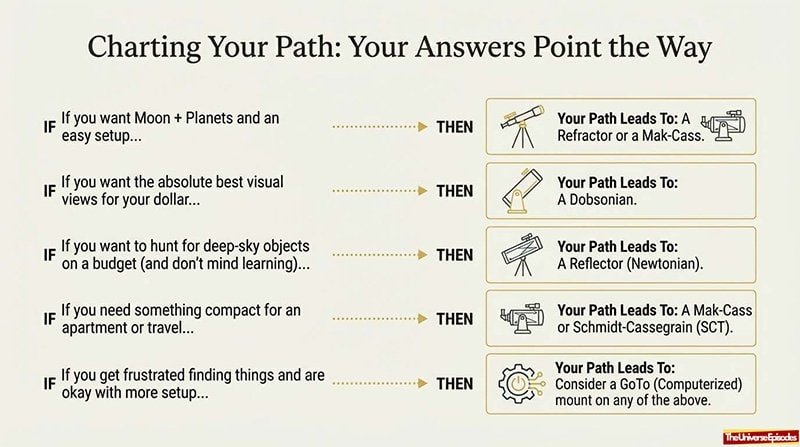
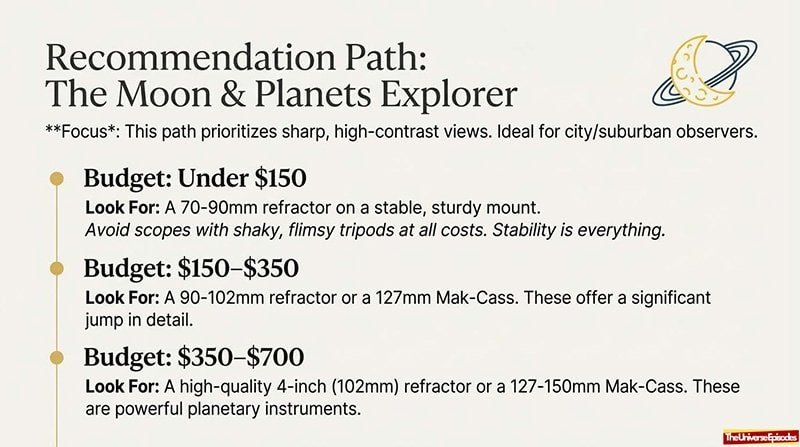
- Moon and planets
→ Refractor telescopes work well because they provide sharp, high-contrast views. - Deep-sky objects like nebulae, star clusters, and galaxies
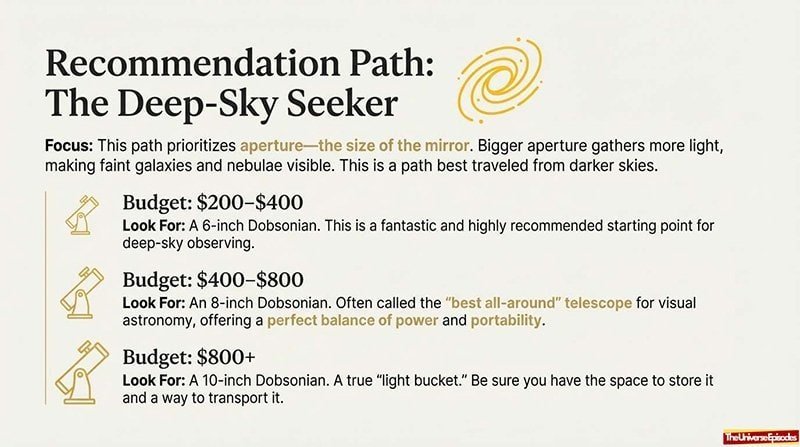
→ Reflector telescopes are often better since they collect more light for the price.
No telescope does everything perfectly, so defining your main interest makes the decision much easier.
2. Understanding Telescope Types (Simply Explained)
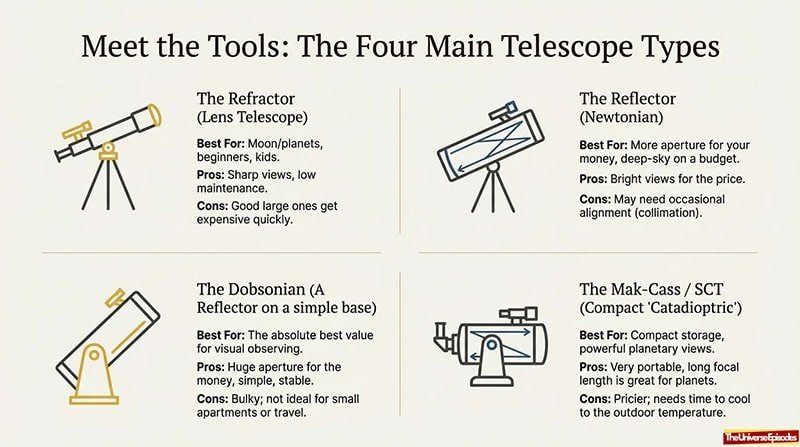
Refractor Telescopes
These use lenses to focus light.
- Pros: Sharp images, low maintenance, easy for beginners
- Cons: Smaller aperture for the price
Reflector Telescopes
These use mirrors to gather light.
- Pros: Larger aperture at a lower cost, great for deep-sky viewing
- Cons: Require some basic maintenance
3. Two Key Factors That Matter Most
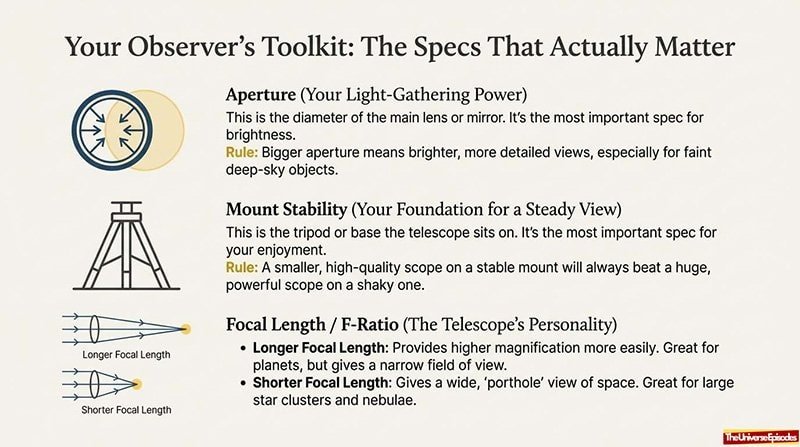
1) Aperture Matters More Than Magnification
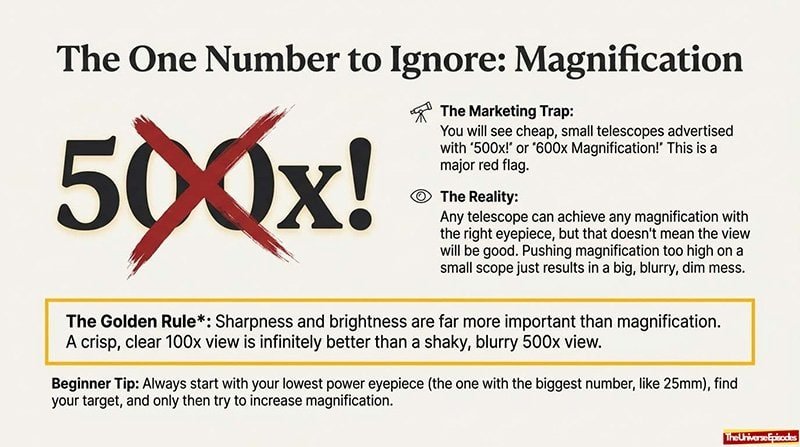
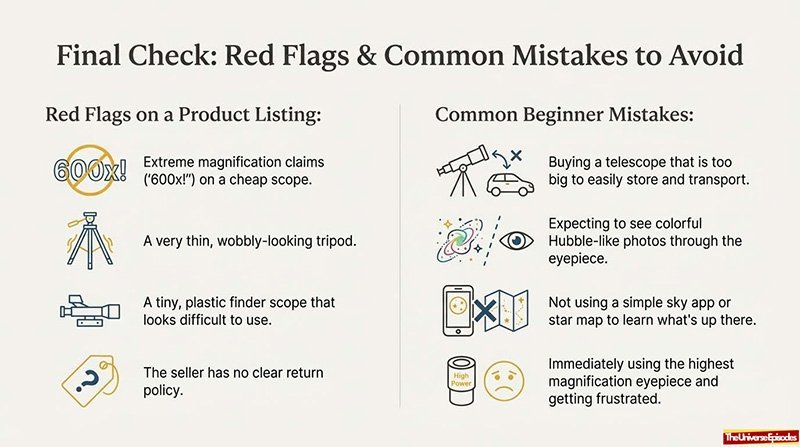
High magnification is often used as a marketing hook, but it is not the most important feature.
- Aperture determines how much light the telescope collects
- Larger aperture means brighter and more detailed views
2) A Stable Mount Is Essential
Even the best optics are useless if the telescope shakes.
- Look for a solid tripod and mount
- Poor stability quickly leads to frustration and disuse
4. Choosing Based on Your Budget
A decision-based approach helps narrow your options.
- Lower budgets → Small refractors or compact reflectors
- Long-term hobby → Moderate aperture with a sturdy mount
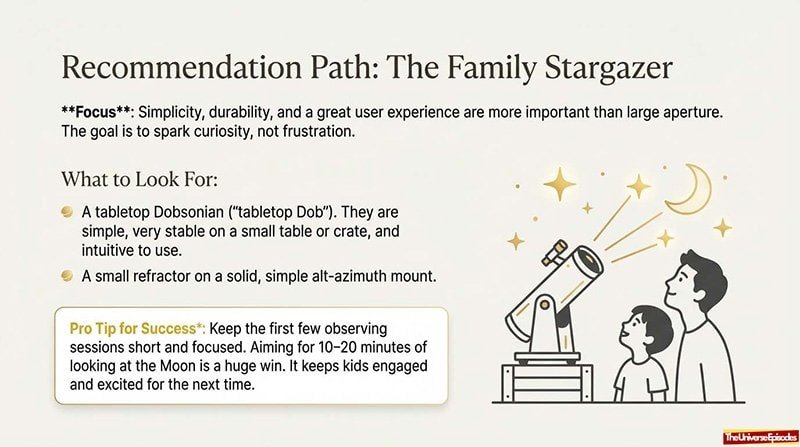
- Families and kids → Simple controls and easy setup
An affordable telescope that gets used often is far better than an expensive one that stays indoors.
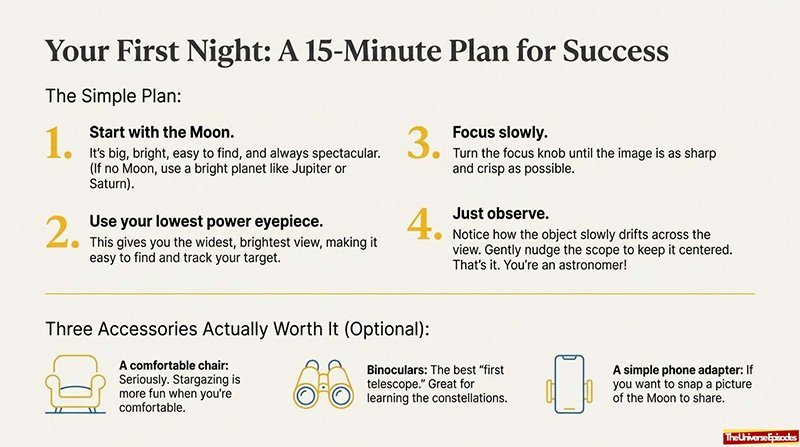
5. Tips for a Successful First Night of Observing
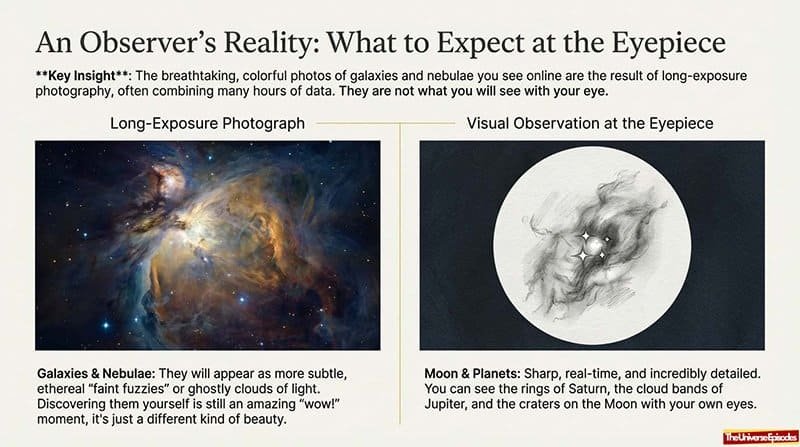
- Keep your expectations realistic
- Start with the Moon to learn the controls
- Avoid too many accessories at the beginning
- Portability and ease of setup increase how often you observe
Final Thought: What Is the Best Telescope?
The best telescope is not the most powerful one, but the one you actually use.
A telescope that is portable, intuitive, and quick to set up encourages regular observing and steady improvement. For beginners, choosing simplicity over complexity leads to a better and more enjoyable start in astronomy.