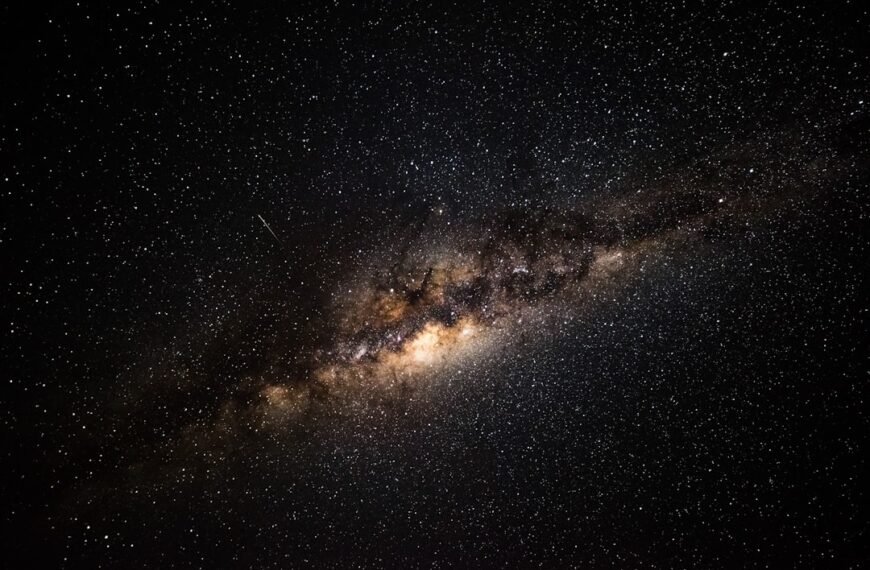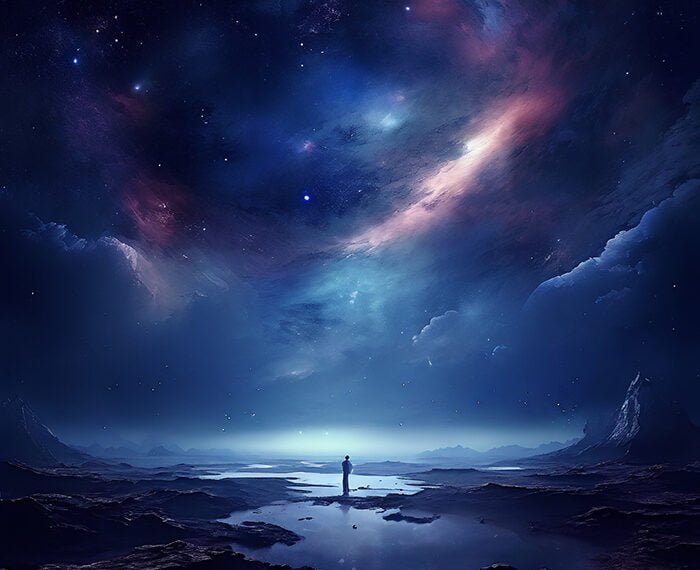

Whenever I look up at the night sky, it’s hard to imagine that our galaxy, the Milky Way, is actually pretty quiet. It’s a middle-aged, calm neighborhood that births maybe one or two new stars a year.
But if we could look back 12 billion years, the universe was a much wilder place. There were “monster galaxies” back then that churned out stars hundreds, sometimes thousands of times faster than our galaxy does today. I’ve always been fascinated by these cosmic beasts—how did they get so big, so fast? Did they all grow up the same way?
For a long time, astronomers assumed the answer was simple: giant collisions. But a new study using the ALMA and James Webb Space Telescopes (JWST) has just proven that nature is far more creative than we gave it credit for.
Piercing Through the Dust
Studying these galaxies is incredibly difficult because they are hiding behind thick curtains of dust. It’s like trying to see a lighthouse through heavy fog.
To solve this, researchers did something brilliant. They took two of the world’s most powerful telescopes and matched their “eyesight” perfectly. They used ALMA to see through the dust and map the gas (the fuel for new stars), and they used JWST to see the stars that were already there.
By layering these two maps on top of each other, they looked at three specific galaxies in the Sextans constellation. Honestly, the results are stunning because each galaxy tells a completely different story.
Three Monsters, Three Different Personalities

The Car Crash (AzTEC-1)
The first galaxy, AzTEC-1, is exactly what scientists used to expect. The maps show chaos: star formation is exploding everywhere, while the older stars are knotted tightly in the center.
It looks like a classic major merger—a violent, head-on collision between two massive galaxies. Imagine two speeding freight trains smashing into each other; the energy and wreckage trigger a firework display of new stars. It’s messy, violent, and very effective at building a galaxy.
The Overloaded Pizza (AzTEC-4)
But then there is AzTEC-4, which completely surprised the team. ALMA saw what looked like spiral arms forming stars, but JWST saw a calm, smooth disk of older stars. There was no sign of a crash.
So, what’s happening here? Scientists think this galaxy is suffering from “indigestion.” It’s likely a massive disk that got too heavy with gas. I like to think of it like spinning a pizza dough that’s overloaded with too many toppings—eventually, it can’t hold its shape and starts to tear and clump up. The galaxy is collapsing under its own weight, creating stars without needing to crash into anyone else.
The Snack Attack (AzTEC-8)
Finally, we have AzTEC-8. This one didn’t crash, and it isn’t falling apart. Instead, the images show a super-concentrated burst of activity right in the bullseye, surrounded by a stable disk.
This looks like a “minor merger.” The galaxy likely cannibalized a smaller neighbor or sucked in a stream of gas from space. It’s like a snack delivery that fueled the center without ruining the rest of the galaxy.
Why This Changes Everything
I love this discovery because it reminds us that the universe doesn’t follow a boring, single-track script.
We used to think that to make a monster galaxy, you needed a monster collision. Now we know that’s not true. You can smash galaxies together, you can overload them with gas until they fragment, or you can gently feed them smaller galaxies.
As we point these telescopes at more targets, I suspect we’re going to find even more strange and varied ways that the cosmos builds its giants. It turns out, every monster has its own origin story.