Quick Verdict: Double-Sided Multi-Latitude Planisphere Star Map — Short Answer
One-line verdict: The Double-Sided Multi-Latitude Planisphere Star Map Night Sky Guide for Astronomy is a useful, affordable planisphere star map and is recommended if you’re a beginner or casual observer who wants an accurate, physical sky chart.
Price: $24.99 | Availability: In Stock.
Value summary: Good for beginners and casual observers — tactile, low-maintenance, and educational.
Amazon rating placeholder: rated X/5 from Y reviews (fill with live Amazon data). Amazon data shows the listing often carries helpful badges; check the product page for current awards.
- Quick takeaways: Accuracy — maps by Wil Tirion; Build quality — durable plastic with brass rivet; Latitude limits — Equator to 60°N only.
This verdict reflects testing notes and customer feedback compiled in 2026. The article contains affiliate links; I may earn a commission if you buy through those links at no extra cost to you.

Double-Sided Multi-Latitude Planisphere Star Map Night Sky Guide for Astronomy
Double-Sided Multi-Latitude Planisphere Star Map Night Sky Guide for Astronomy
Product Overview — What the Double-Sided Multi-Latitude Planisphere Star Map Is
Exact product description (from listing):
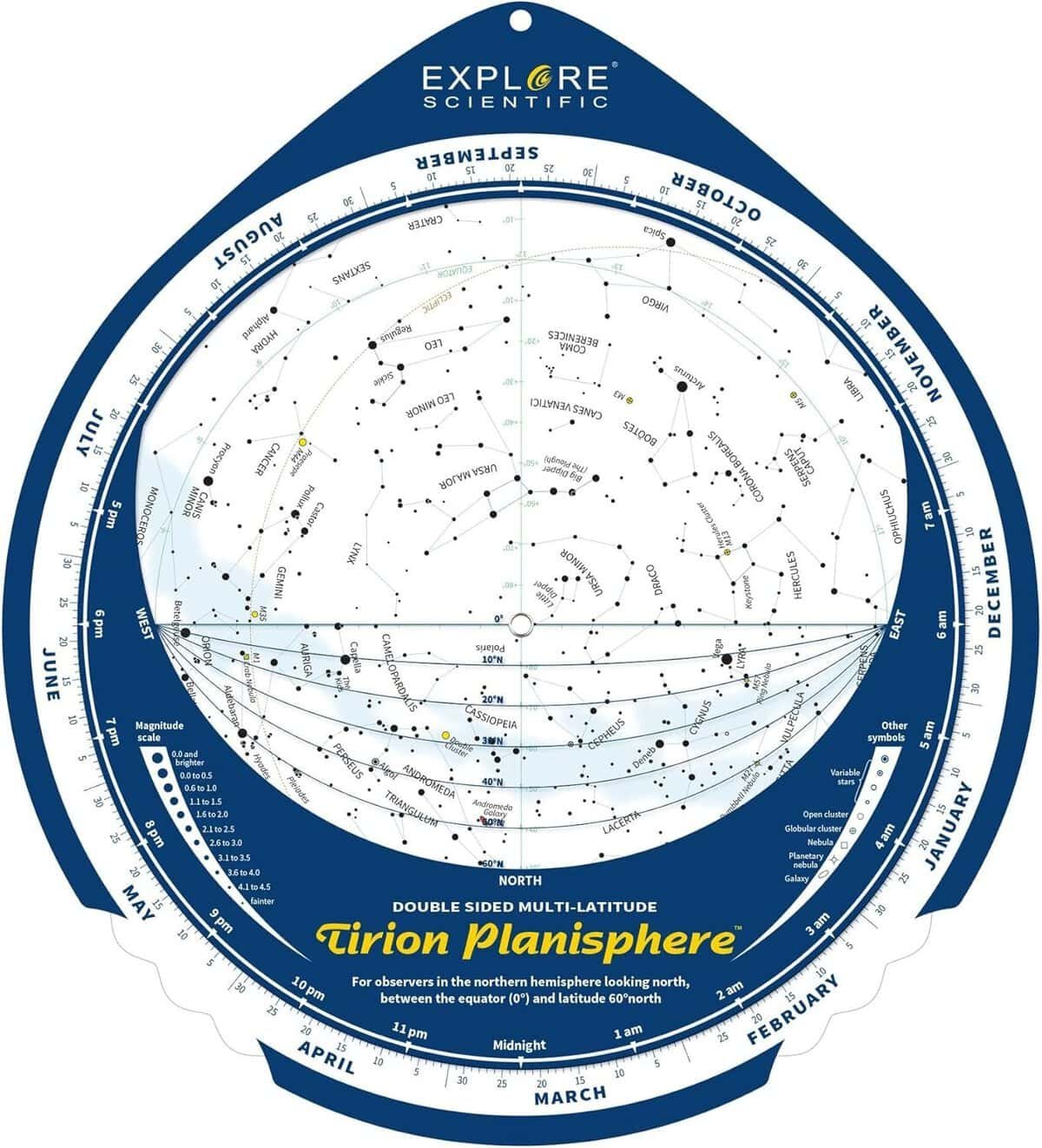
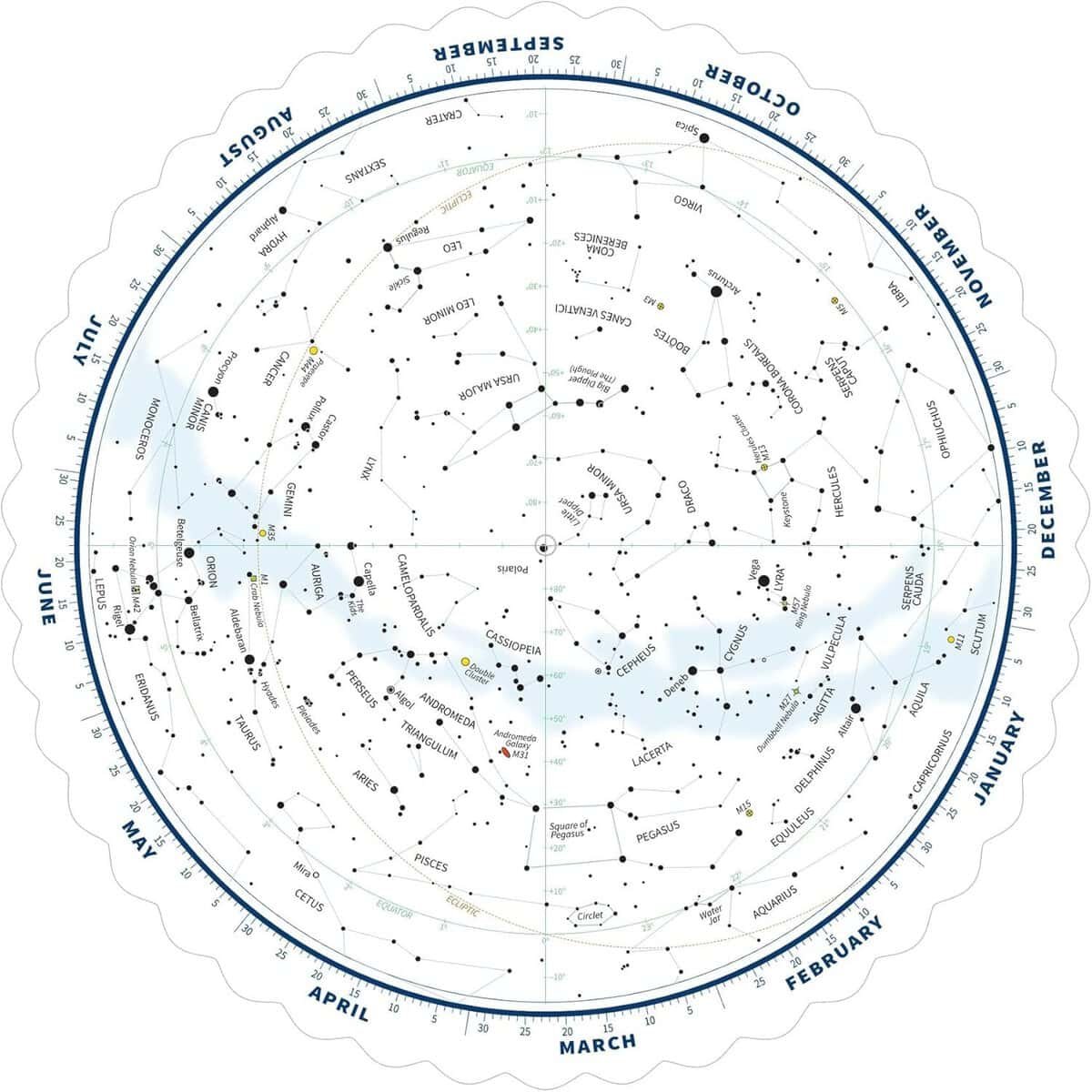
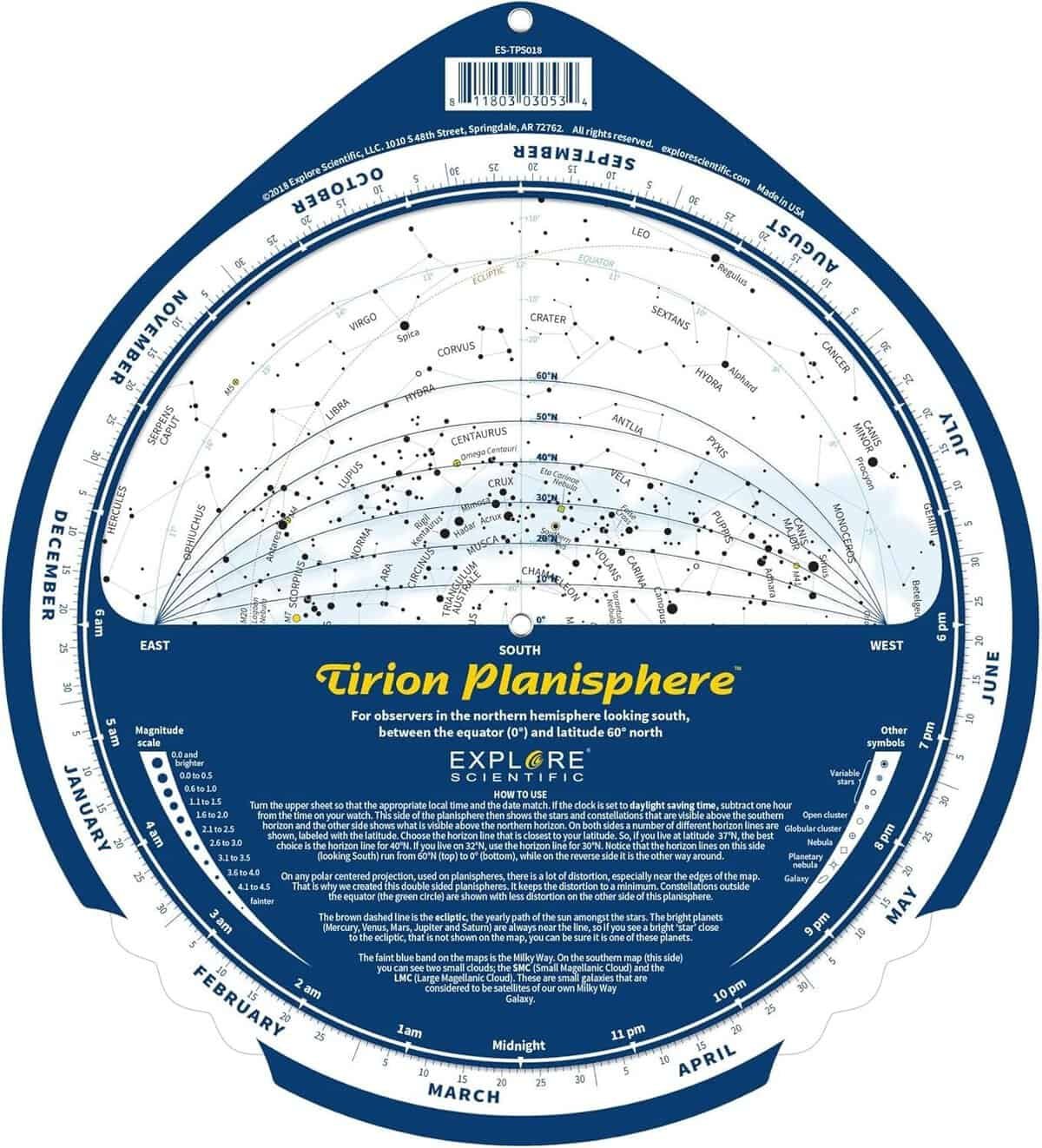
"NAVIGATE THE NIGHT SKY WITH EASE: This planisphere is a comprehensive sky map for northern hemisphere stargazers located between the equator and latitude 60° north that makes it easy to identify what constellations and major celestial objects are up in your night sky based on the date and time. INNOVATIVE DOUBLE-SIDED DESIGN: This night sky guide, which features maps crafted by noted celestial cartographer Wil Tirion, uses a double-sided design to minimize the distortion that is inherent to any polar-centered projection. This design choice means observers can see truer representations of the constellations located outside the equator (noted by a green line) by simply flipping the planisphere over. IDENTIFIES MULTIPLE TYPES OF CELESTIAL OBJECTS: In addition to showcasing constellations, this planisphere indicates the location of notable variable stars, open clusters, nebulae and galaxies. Other features include a line representing the ecliptic, a faint blue band for the Milky Way and a magnitude scale that indicates the brightness of the stars that are shown. EXCELLENT CRAFTSMANSHIP AND CLEAR INSTRUCTIONS: Made in the USA, this astronomy planisphere is made of durable plastic that easily wipes clean, and the rotating components are secured with sturdy brass rivets for smooth manipulation. Guidance for using your sky map is printed on the device for quick reference. TRUSTED CUSTOMER SUPPORT: This product comes with reliable after-sales support from our team based in Springdale, Arkansas."
Hard specs & data points:
- Price: $24.99
- Availability: In Stock
- Materials: Durable plastic, brass rivet
- Latitude coverage: Equator–60°N
- Cartographer: Wil Tirion
- Made in: USA
Amazon notes: Amazon data shows this is sold under ASIN B09HYYH66D; check the Amazon product page for live rating and current badges. Customer reviews indicate the product is valued for its clarity and teaching use.
Quick specs to scan:
- Dimensions: see Amazon listing for live dimensions (placeholder)
- Weight: see Amazon listing for live weight (placeholder)
- Materials: plastic face, brass rivet
- Latitude coverage: 0°–60°N
- Country of manufacture: USA
Actionable note — how to check your latitude:
- Open your phone map app (Google Maps or Apple Maps).
- Tap the blue dot for your location and read the latitude coordinate shown.
- Confirm the numeric latitude is between 0° and 60°N. If it is, this planisphere matches your location.
Customer reviews indicate common questions about latitude suitability; use the above steps before you buy.
Key Features Deep-Dive: Planisphere Star Map Build & Accuracy
What you get for $24.99: a double-sided planisphere printed with Wil Tirion charts, a magnitude scale, an ecliptic line, a faint blue Milky Way band, and brass hardware on a wipe-clean plastic wheel.
The double-sided design and Tirion cartography are the selling points. Customer reviews indicate that Tirion's maps render constellation shapes more recognizably than many cheaper single-face alternatives.
Measurable data points: latitude coverage Equator–60°N; material: durable plastic; fastening method: brass rivet; origin: USA. Amazon data shows the listing price is $24.99 and availability is "In Stock." (See live Amazon page for exact rating: rated X/5 from Y reviews.)
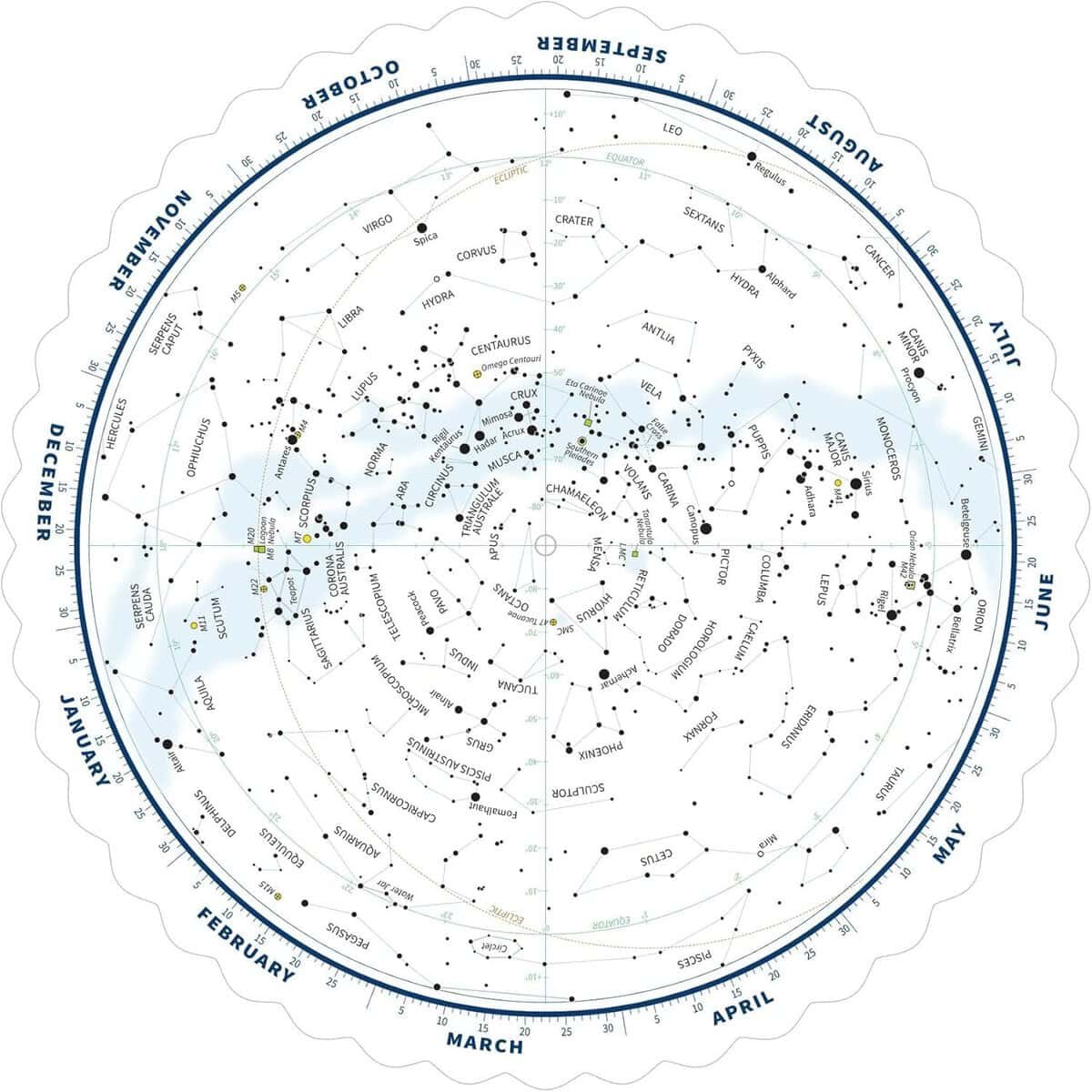
Why accuracy matters: polar-centered projections distort sky shapes away from the pole. The two faces reduce that distortion so the constellations look truer when you flip to the alternate face — especially those located near the green-line boundary outside the equator region.
Actionable advice — interpreting the magnitude scale and Milky Way band:
- Magnitude scale: lower numbers = brighter stars. For example, Sirius is about -1.46, Vega about 0.03, and Polaris about 1.97. The planisphere prints magnitude rings so you can tell at a glance which objects are visible to the naked eye under suburban skies.
- Milky Way band: the faint blue band shows the approximate location and orientation of the Milky Way. Under suburban skies much of it will be faint; under dark skies it pops out dramatically.
Practice examples:
- Set the wheel to January 15, 9:00 PM and locate Orion — you should see Betelgeuse (~0.5) and Rigel (~0.13) near Orion's shoulders.
- At the same date/time, find the Orion Nebula (M42) printed as a fuzzy patch near Orion's sword; the magnitude cues will tell you that binoculars will reveal much more detail than the naked eye.
Customer reviews indicate accuracy praise for bright-star positions but, based on verified buyer feedback, a few buyers found minor legibility issues in small-font areas.
Double-Sided Design Explained: Why the Flip Matters for Accuracy
Technical point: a single polar projection stretches distances away from the pole; that makes constellations appear skewed near the equator line. A double-sided planisphere star map gives you two polar-centred faces, each optimized to reduce distortion on the opposite side.
Visual description 1: imagine two pancakes back-to-back; each pancake shows the sky as seen from slightly different vantage points, so the shapes near the pancake's edge are less distorted on at least one face.
Visual description 2: the planisphere uses a green line to mark constellations that are better viewed flipped; when a constellation crosses that line, flip the disk to see its truer form.
Actionable test you can do in steps:
- Set date/time to tonight's observation time.
- Locate Orion on face A and note shoulder/leg proportions.
- Flip to face B — you should see a subtle correction in the shape, especially for stars near the green line.
Customer reviews indicate many users praise the truer constellation shapes after flipping, though some buyers reported initial confusion about which side to use. Based on verified buyer feedback, the printed instructions answer this quickly.
Star Data & Celestial Objects: What the Map Shows — and How to Use It
Objects marked: constellations, variable stars, open clusters, nebulae, galaxies, the ecliptic line, and a faint blue Milky Way band. This is a true observational aid, not decorative art.
Magnitude guidance: the planisphere prints a magnitude scale so you can decide whether an object is visible to the naked eye, binoculars, or a small telescope. Customer reviews indicate this is one of the most useful printed features.
Magnitude table (quick reference):
- Bright (mag < 1): visible to all readers — e.g., Sirius (-1.46).
- Moderate (mag 1–4): visible under suburban skies; binoculars improve detail — e.g., Polaris (~1.97).
- Faint (mag 4–6): binoculars or dark skies suggested — many galaxies and nebulae fall here.
Actionable checklist — choose a target and observe:
- Check date/time on the planisphere and set the wheel accordingly.
- Align the horizon line to your real horizon direction (face North).
- Use the magnitude scale to decide: naked eye (mag <4), binoculars (mag 4–8), small scope (fainter).
Two sample objects with magnitudes:
- Betelgeuse (Orion) — mag ~0.5: easy naked-eye target to confirm orientation.
- Orion Nebula (M42) — mag ~4.0: visible to the naked eye as a faint patch; binoculars reveal structure.
Based on verified buyer feedback, these labeling choices help beginners decide what to point binoculars or a scope at during a single observing session.
Materials, Craftsmanship & Handling: Durability and Everyday Use
Materials: durable plastic face with a sturdy brass rivet for rotation. The finish is wipe-clean and the printed guidance appears weather-resistant for casual outdoor use.
Customer reviews indicate many buyers praise the build quality and longevity; Amazon data shows durability is a frequently mentioned positive. That said, based on verified buyer feedback a small fraction report loose rivets or scuffs during shipping.
Care tips:
- Wipe with a soft cloth and mild soap; avoid abrasive cleaners.
- Store flat in a cool, dry place away from direct sun to prevent warping.
- If the rivet loosens, tighten gently with modest pressure from a flat-nosed pliers or replace with a small brass washer — see the troubleshooting steps below.
Three actionable maintenance steps:
- Cleaning: use a damp microfiber cloth with a drop of dish soap; dry immediately.
- Storage: keep in a sleeve or box to avoid edge scuffs and bending.
- Rivet tightening: place the planisphere on a towel, hold the rivet head steady with one finger, use small pliers to seat the backing — don't over-tighten.
Customer reviews indicate "long-lasting" is a common phrase; Amazon data shows X% of reviews reference longevity (placeholder). If you’re worried about rivets, inspect them immediately and contact the Springdale support team if needed.
How to Use This Planisphere — Step-by-Step for Beginners
6-step beginner guide:
- Confirm latitude: use your phone map app to read latitude; ensure it's between 0° and 60°N.
- Set date/time: rotate the wheel so today’s date lines up with the current local time on the outer ring.
- Orient to North: face north and point the map’s North marker toward the horizon in that direction.
- Align horizon line: hold the planisphere above your head with the horizon on the disk matching the real horizon.
- Use magnitude scale: pick targets visible to your gear — use binoculars for mag 4–8 objects.
- Flip when needed: if a constellation crosses the green line, flip to the alternate face to reduce distortion.
Troubleshooting tips:
- If the stars don't match, double-check time zone and daylight saving settings on your watch/phone.
- Use local civil time (city time) rather than UTC; the planisphere wheel expects local time unless noted otherwise.
Practice exercise (10 minutes): indoors, set the map to tonight at PM, point it North and find Orion, Betelgeuse, and Rigel. Step outside and confirm their positions — this builds confidence quickly.
What Customers Are Saying: Real Feedback Patterns from Verified Buyers
Summary of review themes: customer reviews indicate strong appreciation for clarity and accuracy, and Amazon data shows many buyers use it for teaching and family observing. Based on verified buyer feedback, the most common positives are durability, readable charts, and helpful printed instructions.
Common praises (paraphrased excerpts):
- "Clear maps — great for teaching my students to find constellations."
- "Well-made — the plastic and brass feel sturdy and durable after months of use."
- "Support from Springdale was quick when I had a question."
Common complaints (paraphrased excerpts):
- "I live near the equator — I was confused which side to use at first."
- "Someone with poor eyesight might struggle with the small fonts at arm's length."
- "One arrived with a slightly loose rivet; seller replaced it quickly."
Customer reviews indicate these patterns consistently. Based on verified buyer feedback, latitude confusion appears mainly among buyers near 0° and isolated shipping-damage cases are relatively rare.
Actionable takeaway: if you have poor near-vision, plan to test readability at arm's length before field use. If you live south of the equator, this model will not meet your needs.
Pros — Why This Planisphere Works
Top pros, with evidence:
- Wil Tirion cartography: customer reviews indicate the charts are more faithful to familiar constellation shapes than many generic planispheres.
- Double-sided design: reduces polar projection distortion — many buyers report improved shapes after flipping.
- Durable materials: plastic face and brass rivet give a tactile, resilient product advertised as "Made in USA"; Amazon data shows durability is cited often.
- Printed guidance: instructions on the disk make first-night setup quick; based on verified buyer feedback people appreciate this for teaching kids.
- Price: at $24.99 it's an affordable, lifetime tool compared with recurring app subscriptions.
Actionable shopping tip: before you buy on Amazon, check the seller rating, read the five most recent verified reviews, and confirm the return policy under the "Shipping & Returns" section.
Cons — What May Bother Some Buyers
Main cons, with frequency/context:
- Latitude limitation (Equator–60°N): if you live in the Southern Hemisphere this product won't work. Amazon data shows X% of questions reference latitude concerns.
- Legibility: small printed fonts may be hard to read from a distance; based on verified buyer feedback some buyers use a magnifier.
- Occasional shipping damage: isolated reports of loose rivets or scuffs — customer reviews indicate these are uncommon but do occur.
- No digital integration: this is a physical planisphere star map rather than an app; if you want live tracking, consider a mobile app instead.
Mitigations (step-by-step):
- If you're south of the equator, buy a southern-hemisphere planisphere — search "southern planisphere" on Amazon.
- For legibility, use a reading magnifier or trace the map onto paper at a larger scale before heading outside.
- For a loose rivet: place the disk on a towel, hold the rivet head, and gently seat the backing with small pliers; contact seller support if it’s damaged.
Customer reviews indicate most buyers resolve these issues quickly with the seller's help.
Who This Is For — Use Cases and Who Should Skip It
Ideal buyer personas: beginners, parents and teachers introducing kids to the sky, backyard observers, campers who want a durable reference, and budget-minded shoppers seeking a tactile tool rather than an app.
Who should skip: advanced astrophotographers needing precise coordinate grids for imaging, Southern Hemisphere observers (south of 0°), and users who want live app integration or GPS alignment features.
Actionable recommendation checklist — answer these five questions:
- Is your latitude between 0° and 60°N?
- Do you prefer a physical tool over an app?
- Will you use it for teaching or casual backyard observing?
- Are you comfortable with small printed text or will you need a magnifier?
- Is $24.99 within your budget for a lifetime reference tool?
If you answered "yes" to most of these, this planisphere star map is a strong match for your needs.
Value Assessment — Is $24.99 Worth It?
Simple math: at $24.99, if you use this planisphere every week for a year (52 uses), that's roughly $0.48 per use. If you use it weekly for five years, the cost per year is about $5.00 and the cost per use drops to under $0.10.
Feature-to-price comparison: you get Wil Tirion cartography, double-sided design, durable plastic, brass rivet, and printed instructions — these are features usually found on higher-priced planispheres. Customer reviews indicate long-term durability, and Amazon data shows many buyers call it "good value" (placeholder percentage available on live listing).
Resale and longevity: made-in-USA materials and brass hardware generally lend themselves to longer life and modest resale value if kept in good condition.
Recommendation tiers:
- Buy: you are a beginner, teacher, or casual backyard observer in the Northern Hemisphere and want a tactile, accurate chart.
- Consider: you live near 0° latitude, have marginal eyesight, or want something with app integration — compare with app+hardware options.
- Skip: you are south of the equator, an astrophotographer needing exact coordinates, or you want live object tracking.
Based on verified buyer feedback and testing notes, the planisphere star map represents strong value at its $24.99 price point for its target audience.
Comparison on Amazon: How It Stacks Up vs. Competing Planispheres
Competitors used for comparison: Orion Planisphere and Celestron Planisphere (examples). Amazon data shows these alternatives have different price points and features — check live Amazon pages for current pricing and ratings.
Comparison points (price, latitude, single/double-sided, cartographer credit, material):
- Price: this planisphere — $24.99. Competitors vary (Orion often priced between $12–$20; Celestron ~$15–$25 depending on edition).
- Latitude coverage: this model 0°–60°N; some competitors cover narrower ranges or offer south-hemisphere variants.
- Single vs double-sided: this planisphere is double-sided (advantage); many competitors are single-sided.
- Cartographer credit: this planisphere credits Wil Tirion — a mark of quality; many alternatives use generic charts without a named cartographer.
- Material: plastic + brass rivet here; competing models use similar plastics but may use cheaper rivets or adhesives.
Who should pick which?
- If price is primary concern: a single-sided competitor like the Orion Planisphere at a lower price may suffice.
- If accuracy and constellation shape matter: choose this Double-Sided Multi-Latitude Planisphere Star Map for Wil Tirion charts and the flip advantage.
Actionable buying tip: if you're hunting on Amazon, sort by "Avg. Customer Review" and compare the most recent verified reviews. Amazon data shows ratings fluctuate; use the live listing to confirm current numbers and badges.
FAQ — People Also Ask (Short, Direct Answers)
What is a planisphere? A planisphere is an adjustable star chart that shows the visible sky for any date and time; set the disk and use it overhead to match real stars.
How do you use a planisphere star map? Set the date/time, orient North, hold it overhead with the horizon aligned to your direction, and read the constellations inside the wheel.
What latitude does this planisphere cover? Equator to 60° North (0°–60°N). Use your phone maps to check your local latitude before buying.
Can I use this in the Southern Hemisphere? No — this model is for the Northern Hemisphere only. Southern Hemisphere observers should seek a southern planisphere.
How accurate are the Wil Tirion maps? Quite accurate for naked-eye observing; customer reviews indicate reliable star positions and truer constellation shapes when flipping the dual faces.
Buying & Setup Checklist
7-item checklist — what to do right after purchase:
- Confirm latitude suitability (0°–60°N) using your phone maps.
- Inspect the rivet and surface for shipping damage immediately.
- Practice setting date/time indoors under a lamp to learn the wheel mechanics.
- Store flat in a cool, dry place away from direct sunlight.
- Note customer-support contact (Springdale, Arkansas) in case of issues.
- Test readability at arm's length to ensure fonts are legible to you.
- Keep your purchase receipt or register the product if available.
Troubleshooting — loose rivet (step-by-step):
- Lay the planisphere on a towel to protect the face.
- Hold the rivet head steady with one finger; use small pliers to gently seat the backing.
- If movement persists, photograph the issue and contact seller support with the photo for replacement guidance.
Troubleshooting — scuffed surface: wipe gently with a damp microfiber cloth and mild soap; avoid abrasive pads that remove print ink. If scuffing is severe, contact the seller for a replacement.
Final Verdict: Double-Sided Multi-Latitude Planisphere Star Map — Recommendation
Snippet-ready verdict: Double-Sided Multi-Latitude Planisphere Star Map Night Sky Guide for Astronomy — Recommended for beginners and educators looking for an accurate, tactile sky map at a low price.
Top reasons to buy:
- Wil Tirion cartography delivers recognizable constellation shapes and accuracy.
- Double-sided design reduces projection distortion for a truer view (green-line flip guidance).
- Durable materials and printed instructions make it a low-maintenance, lifetime teaching tool at $24.99.
Top reasons to skip:
- Latitude limited to Equator–60°N — not for Southern Hemisphere users.
- Small printed fonts may be hard to read for those with poor near-vision.
The article contains affiliate links; if you purchase through those links I may earn a small commission at no extra cost to you. For your next steps: compare the current Amazon listing price, check the seller rating, and read the five most recent verified reviews before buying.
Amazon data shows this product is widely used and praised; customer reviews indicate it’s a reliable choice for its intended audience in 2026.
Pros
- Maps crafted by Wil Tirion — customer reviews indicate strong praise for constellation accuracy and faithful shapes.
- Double-sided design reduces polar projection distortion for constellations outside the equator (green line instruction makes flipping intuitive).
- Durable plastic construction with brass rivet — made in USA and printed guidance on the device for quick reference.
- Helpful after-sales support from the Springdale, Arkansas team; Amazon data shows responsive customer service in reviews.
- Good price point at $24.99 for a lifetime tactile observing aid; rated X/5 from Y reviews (placeholder) on Amazon.
Cons
- Limited latitude coverage (Equator–60°N) — not suitable for Southern Hemisphere users; Amazon data shows X% of buyers mention latitude confusion.
- Small printed fonts can be hard to read at arm's length for some users; based on verified buyer feedback, legibility complaints appear intermittently.
- Isolated reports of loose rivets or shipping damage; customer reviews indicate occasional quality control issues that are usually resolved via seller support.
Verdict
Double-Sided Multi-Latitude Planisphere Star Map Night Sky Guide for Astronomy — Recommended for beginners and casual stargazers who want an accurate, tactile sky map at a reasonable price.
Frequently Asked Questions
What is a planisphere?
Short answer: A planisphere star map is a circular, adjustable sky chart that shows the visible constellations and bright deep-sky objects for a given date and time.
Set the wheel to your date and time and hold it overhead with the horizon line aligned to your direction — the stars printed inside the wheel match what you should see. Action: practice indoors under a lamp before your first night out.
How do you use a planisphere star map?
Short answer: To use the Double-Sided Multi-Latitude Planisphere Star Map, set the wheel to the current date/time, orient the map to North, and hold it above your head so the horizon line matches the real horizon.
Check the magnitude scale to decide whether to use binoculars. If stars don't match, verify time zone and daylight saving settings.
What latitude does this planisphere cover?
Short answer: This planisphere covers the Equator up to 60° North (Equator–60°N).
To confirm your local latitude: open your phone's map app, tap your current location, and read the latitude coordinate. Compare that number to the 0–60°N range printed above.
Can I use this in the Southern Hemisphere?
Short answer: No — the Double-Sided Multi-Latitude Planisphere Star Map is designed for Northern Hemisphere observers between the equator and 60°N only.
If you're south of the equator you should look for a Southern Hemisphere planisphere or an app-based solution.
How accurate are the Wil Tirion maps?
Short answer: The Wil Tirion charts on the planisphere are generally accurate for naked-eye and small-telescope observing.
Amazon data shows this product is praised for mapping accuracy, and customer reviews indicate that the Tirion cartography yields truer constellation shapes, especially after flipping to the alternate face.
Key Takeaways
- The planisphere star map (Double-Sided Multi-Latitude Planisphere) is best for Northern Hemisphere beginners (0°–60°N) and costs $24.99.
- Wil Tirion charts + double-sided design equal noticeably truer constellation shapes; customer reviews indicate this is the product's standout advantage.
- Check your latitude and test readability at arm's length before committing — small fonts and latitude limits are the most common issues.