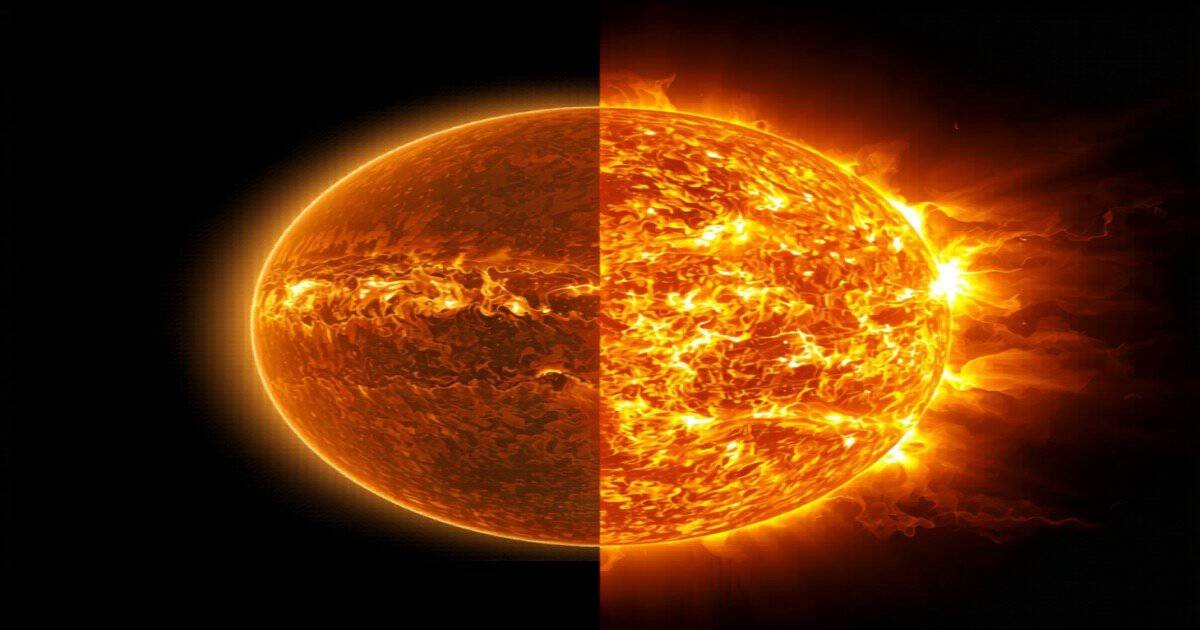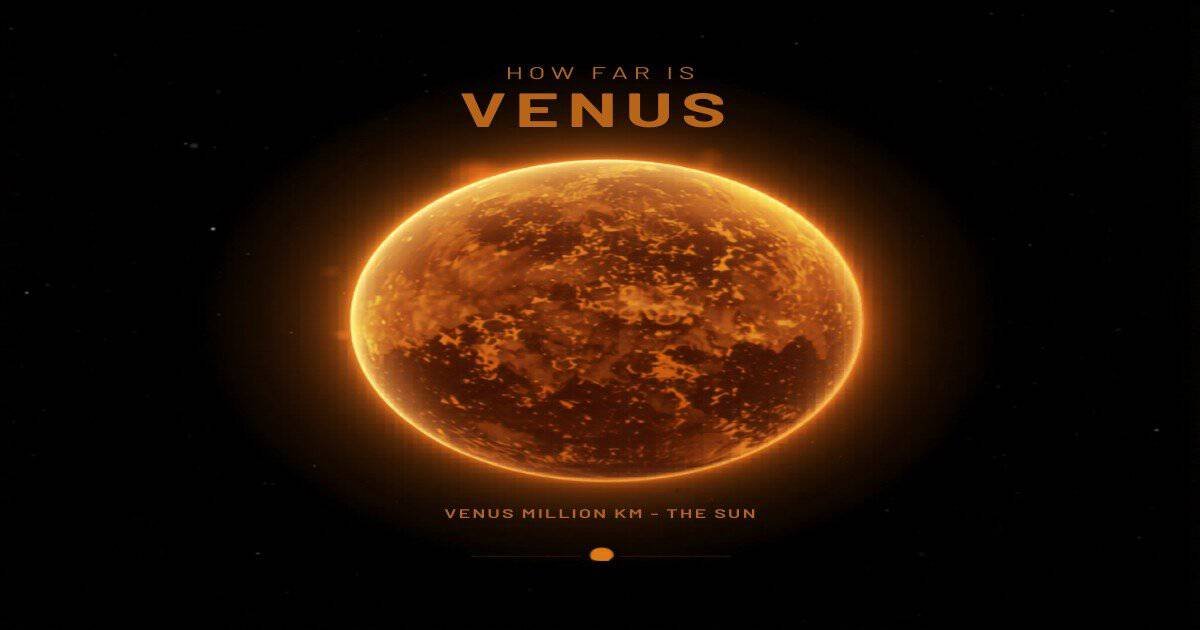
Venus is an average of 67 million miles (108.2 million kilometers) from the Sun — about 0.72 astronomical units (AU). It is the second planet from the Sun and the closest planet to Earth. Because Venus has a nearly circular orbit, its distance stays remarkably consistent — ranging from 66.8 million miles at closest to 67.7 million miles at farthest. Sunlight takes approximately 6 minutes to reach Venus.
Key Takeaways
- Venus orbits at an average of 0.72 AU — 67 million miles from the Sun.
- Venus has the most circular orbit of any planet — distance varies by less than 1.5%.
- Sunlight reaches Venus in 6 minutes.
- Venus is the hottest planet despite being farther from the Sun than Mercury.
- One Venus year lasts just 225 Earth days.
Venus’s Distance from the Sun — Full Numbers
| Measurement | Miles | Kilometers | AU |
|---|---|---|---|
| Average distance | 67.2 million mi | 108.2 million km | 0.723 AU |
| Closest (perihelion) | 66.8 million mi | 107.5 million km | 0.718 AU |
| Farthest (aphelion) | 67.7 million mi | 108.9 million km | 0.728 AU |
What Does 0.72 AU Actually Mean?
Venus sits between Mercury and Earth
One AU equals the average Earth-Sun distance — about 93 million miles. At 0.72 AU, Venus sits about 72% of the way between the Sun and Earth. It receives about 1.9 times more solar energy per square meter than Earth does. That extra solar energy — combined with Venus’s dense CO₂ atmosphere — is what drives its extreme 465°C surface temperature. Interestingly, Mercury is closer to the Sun but receives more solar radiation that simply escapes at night, whereas Venus traps every bit of that energy permanently.
Why Does Venus Have the Most Circular Orbit?
Venus has an orbital eccentricity of just 0.007 — nearly a perfect circle. Its distance from the Sun barely changes throughout the year, varying by less than 1.5%. By comparison, Mercury’s orbit varies by 52% and Earth’s by about 3%. Scientists believe Venus’s nearly circular orbit is the result of its slow rotation and gravitational interactions that have smoothed its orbit over billions of years.
How Does Venus’s Distance Compare to Other Planets?
All 8 planets — distance from the Sun
| Planet | Avg Distance (AU) | Avg Distance (km) | Sunlight Travel Time |
|---|---|---|---|
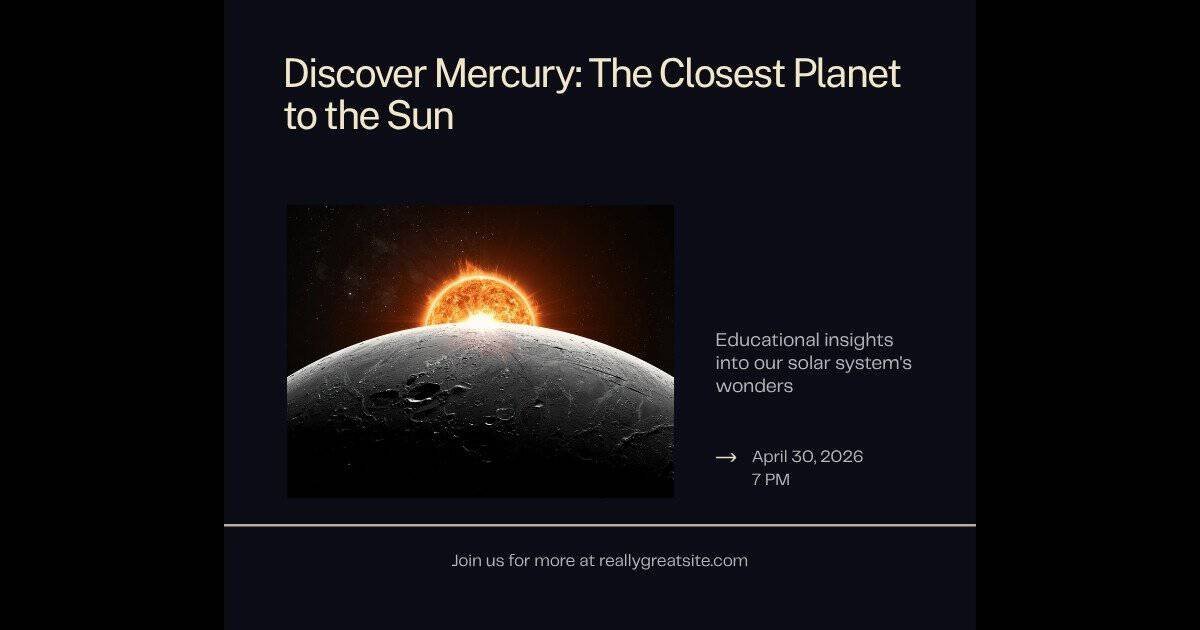
| Mercury | 0.39 AU | 57.9 million km | 3.2 min |
| Venus | 0.72 AU | 108.2 million km | 6 min |
| Earth | 1.00 AU | 149.6 million km | 8.3 min |
| Mars | 1.52 AU | 227.9 million km | 12.7 min |
| Jupiter | 5.20 AU | 778.5 million km | 43 min |
| Saturn | 9.58 AU | 1,432 million km | 80 min |
| Uranus | 19.2 AU | 2,871 million km | 160 min |
| Neptune | 30.1 AU | 4,495 million km | 252 min |
How Long Does Sunlight Take to Reach Venus?
Light travels at 186,000 miles per second. At Venus’s average distance of 67 million miles, sunlight takes about 6 minutes to arrive. This compares to 3.2 minutes for Mercury, 8.3 minutes for Earth, and 43 minutes for Jupiter. The intensity of sunlight at Venus is about 1.9 times stronger than at Earth — yet because Venus reflects about 70% of incoming sunlight back into space (due to its thick cloud cover), less solar energy actually reaches the surface than you might expect.
How Far Is Venus from Earth?
Venus is Earth’s closest planetary neighbor. At its closest approach (inferior conjunction), Venus comes within about 25 million miles (40 million km) of Earth — closer than any other planet. At its farthest (superior conjunction), the distance grows to about 162 million miles (261 million km). On average, Venus is about 100 million miles from Earth. Explore the full series: How Far Is Mercury from the Sun?, How Far Is Mars from the Sun?, and How Far Is Jupiter from the Sun?
How far is Venus from the Sun?
Venus is an average of 67 million miles (108.2 million km) from the Sun — about 0.72 AU. Its nearly circular orbit means this distance barely changes, varying by less than 1.5% throughout the year.
How long does sunlight take to reach Venus?
Sunlight takes approximately 6 minutes to travel from the Sun to Venus. This is faster than Earth (8.3 minutes) but slower than Mercury (3.2 minutes).
Is Venus the closest planet to the Sun?
No. Mercury is the closest planet to the Sun at 0.39 AU. Venus is the second closest at 0.72 AU. However, Venus is Earth's closest planetary neighbor overall.
Why is Venus hotter than Mercury if Mercury is closer to the Sun?
Venus has a thick CO₂ atmosphere that creates a runaway greenhouse effect, trapping heat permanently. Mercury has almost no atmosphere, so heat escapes at night and temperatures plunge to −180°C. Venus stays at 465°C day and night.
How many AU is Venus from the Sun?
Venus orbits at an average of 0.723 AU from the Sun. Its nearly circular orbit means it stays between 0.718 AU (perihelion) and 0.728 AU (aphelion) — the most circular orbit of any planet.