
Key Takeaways
- Mercury is the smallest planet in our solar system with a diameter of 4,880 km (NASA).
- It completes an orbit in 88 Earth days, the fastest of all planets.
- NASA’s MESSENGER mission discovered water ice and possible diamond-rich layers under the surface.
- Mercury has no atmosphere to retain heat, leading to extreme temperature swings from −173°C to 427°C.
- Despite being closest to the Sun, Venus is hotter due to its thick atmosphere.
What Is the Smallest Planet in Our Solar System?

Since Pluto’s reclassification in 2006, Mercury holds the title of the smallest planet.
It’s only slightly larger than Earth’s Moon, yet denser than any other planet except Earth.
Why Is Mercury the Smallest Planet?
Scientists believe Mercury’s size is due to violent early collisions or the Sun’s intense heat stripping away lighter materials.
Two main theories:
- Giant Impact Hypothesis – A massive collision removed much of Mercury’s mantle.
- Solar Proximity Theory – Intense heat and radiation vaporized lighter elements.
Mercury vs Earth
| Planet | Diameter (km) | Mass (Earth=1) | Gravity (m/s²) |
|---|---|---|---|
| Earth | 12,742 | 1.00 | 9.8 |
| Mercury | 4,880 | 0.055 | 3.7 |
Mercury’s iron core takes up 75% of its diameter, making it unusually dense (Space.com).
PAA Question: Why Is Mercury Not the Hottest Planet?
Venus is hotter because its thick atmosphere traps heat through a runaway greenhouse effect.
Mercury’s thin exosphere cannot retain heat, causing 600°C temperature swings.
Mercury’s Orbit and Speed
- Average distance from Sun: 57.9 million km (0.39 AU)
- Orbital speed: ~47 km/s (fastest planet)
- Rotation period: 59 Earth days → one solar day lasts 176 Earth days.
Secrets of Mercury’s Surface
- Caloris Basin: 1,550 km-wide crater from ancient impact
- Hollows: Bright depressions caused by volatile material loss
- Volcanic plains: Evidence of massive lava flows in early history
Mercury’s Atmosphere (Exosphere)
Mercury’s exosphere is composed of sodium, potassium, oxygen, helium, and hydrogen.
It’s replenished by solar wind and micrometeorite impacts.
Magnetic Field Mystery – Extended
Mercury’s magnetic field is about 1% of Earth’s, yet it exists despite Mercury’s small size.
Theories suggest:
- A partially molten core maintained by sulfur-rich composition lowers the melting point.
- Tidal interactions with the Sun may keep parts of the core liquid.
BepiColombo (ESA–JAXA, arriving 2025) will measure the magnetic field’s origin and dynamics in detail.
Firsthand Observation – Extended
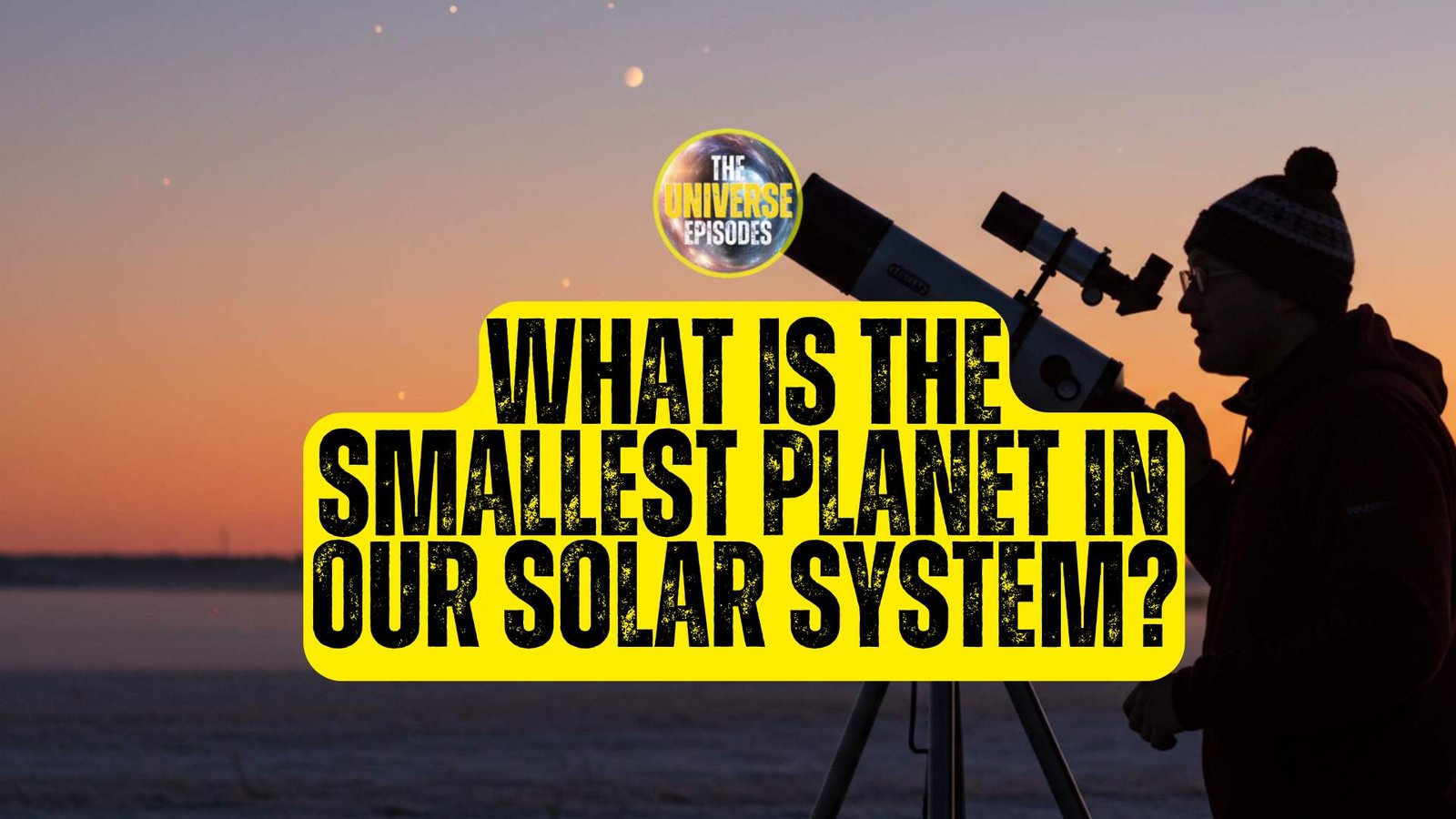
When I planned to observe Mercury, I used SkySafari to pinpoint its location.
- Time: 30 minutes before sunrise during greatest elongation
- Equipment: 70mm refractor telescope, low-power eyepiece
- Conditions: Clear, low-horizon view—trees or buildings can block it easily.
Through the eyepiece, Mercury appeared as a small, bright crescent—tiny yet captivating.
Mercury in Space Exploration – Expanded
- Mariner 10 (1974–1975): First flybys, mapped ~45% of surface.
- MESSENGER (2011–2015): Orbited Mercury, mapped surface, found water ice.
- BepiColombo (2025): Will study magnetic field, composition, and surface in greater detail.
Best Telescopes for Viewing Mercury

| Model | Type | Highlights |
|---|---|---|
| Celestron AstroMaster 70AZ | Refractor | Affordable, easy setup |
| Sky-Watcher SkyMax 127 | Maksutov | Sharp planetary views, portable design |
Temperature Extremes Table
| Condition | Temperature |
|---|---|
| Daytime High | 427°C |
| Nighttime Low | −173°C |
| Swing | ~600°C |
Why Mercury Matters
Studying Mercury reveals:
- How planets form close to stars
- Why some retain magnetic fields while others don’t
- How water and organics can exist in unexpected places
What is the smallest planet in the solar system?
Mercury is the smallest planet in the solar system, with a diameter of 4,880 km — about 38% of Earth's size. It is even smaller than some moons: Jupiter's Ganymede (5,268 km) and Saturn's Titan (5,150 km) are both wider than Mercury.
Why is Mercury the smallest planet?
Mercury is small because it is believed to have lost much of its original mass early in the solar system's history. A giant impact may have stripped away much of its rocky mantle, leaving behind a disproportionately large iron core. Mercury's core makes up about 85% of its radius — the largest core-to-planet ratio of any planet.
Is Mercury smaller than the Moon?
No. Mercury (4,880 km diameter) is larger than Earth's Moon (3,474 km diameter). However, Mercury is smaller than two moons of other planets: Jupiter's Ganymede and Saturn's Titan are both wider than Mercury.
How big is Mercury compared to Earth?
Mercury's diameter is about 4,880 km, compared to Earth's 12,742 km. Mercury is roughly 38% the width of Earth. In terms of volume, about 18 Mercurys would fit inside Earth. Mercury's mass is only about 5.5% of Earth's.
What is the largest planet in the solar system?
Jupiter is the largest planet in the solar system, with a diameter of 142,984 km — about 11 times wider than Earth and 29 times wider than Mercury. Jupiter is so large that all other planets in the solar system could fit inside it.