
Right now, as you read this, things are happening above your head.
A 420-tonne space station is racing across the sky at nearly 28,000 km/h, carrying seven people through sixteen sunrises a day. A rover the size of a small car is taking photographs on Mars. The Sun is throwing charged particles at Earth’s magnetic field. A piece of asteroid you’ll never see is silently flying past at speeds we can only describe in metaphors.
We rarely look up. And when we do, we don’t know what we’re looking at.
This page is built to fix that.
What this dashboard is
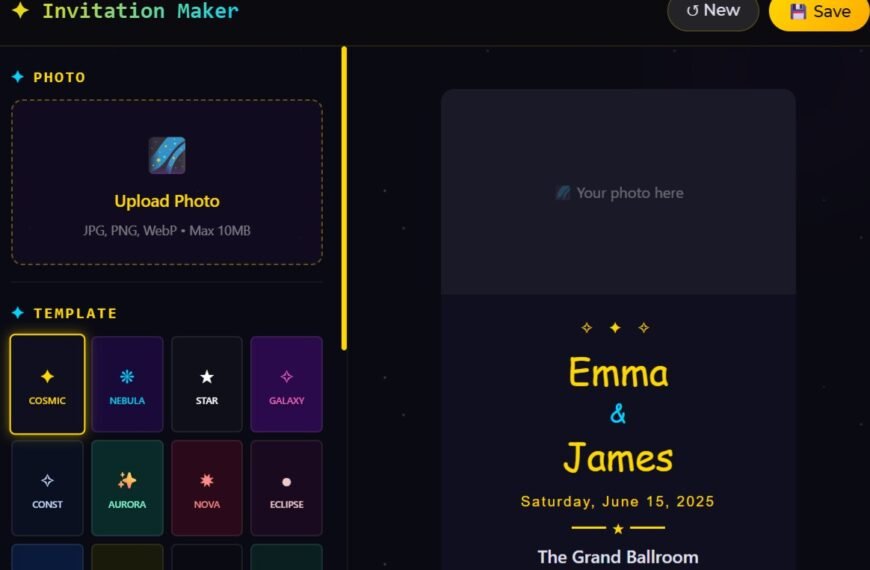
Today in Space is a live cosmic dashboard. It pulls real-time data from NASA, NOAA, satellite trackers, and several independent space services, and brings it all into one view that updates in front of you — every five seconds for some feeds, every sixty for others.
You don’t need to install anything. You don’t need an account. You don’t need to know the difference between magnitude and altitude. Open the page, and the universe is reporting in.
Here’s what each section gives you, why it’s worth checking, and how to use it.
Picture of the Day — a curated window
The image at the top is NASA’s Astronomy Picture of the Day. The series has run since 1995 — over eleven thousand images, each chosen and explained by professional astronomers.
Why it matters. This is the cheapest way to develop a sense of what the cosmos actually looks like. After a year of glancing in once a day, you’ve absorbed images of nebulae, galactic cores, comet trails, lunar geology, and gravitational lensing arcs without ever opening a textbook. Click the image to read the full explanation on NASA’s site.
Sky Now — what’s happening at your location
Three quick tiles tell you the state of your sky in real time:
- Sun — day, twilight phase, or full night, plus the next sunrise and sunset
- Moon — the current phase rendered as an illuminated disc, the percentage lit, and tonight’s moonrise and moonset
- Astronomical Dark — the window of true darkness tonight, when the Sun is more than 18° below the horizon
Why it matters. If you ever plan to look at the sky, this is the section you check first. Stars are only visible during astronomical twilight or true night. The Moon, beautiful as it is, washes out faint objects when it’s bright. Knowing your true-dark window tells you when to take a kid outside with a telescope, when a Milky Way photo will actually work, and when it’s not worth bothering because the Moon is full.
Planets Tonight
The five naked-eye planets — Mercury, Venus, Mars, Jupiter, Saturn — listed with what’s actually true for you, right now:
- Magnitude (how bright the planet is)
- Azimuth (which compass direction to face)
- Altitude (how high above the horizon, in degrees)
- Rise and set times for tonight
Why it matters. Most people who say “I saw Venus” actually saw an airplane. With this section, you walk outside knowing exactly which direction to face and how high to look. Mercury is the hardest of the five to spot — it never strays far from the Sun and is usually drowned in twilight — so any moment it’s visible from your location is genuinely worth catching.
ISS Live — tracking the station
The International Space Station orbits Earth every 92 minutes at an altitude of about 420 km, traveling 7.66 km/s. The card shows its current latitude, longitude, altitude, and ground speed, with a world map updating every five seconds.
Why it matters. When ISS is overhead at night, it’s the third-brightest object in the sky after the Sun and the Moon. You don’t need a telescope — it looks like a steady, fast-moving “star” and crosses the sky in a few minutes. Catching a pass is a small ritual that connects you to the people living up there at this exact moment. The map tells you when ISS is over your part of the world; pair it with a pass-predictor app for the precise minute to step outside.
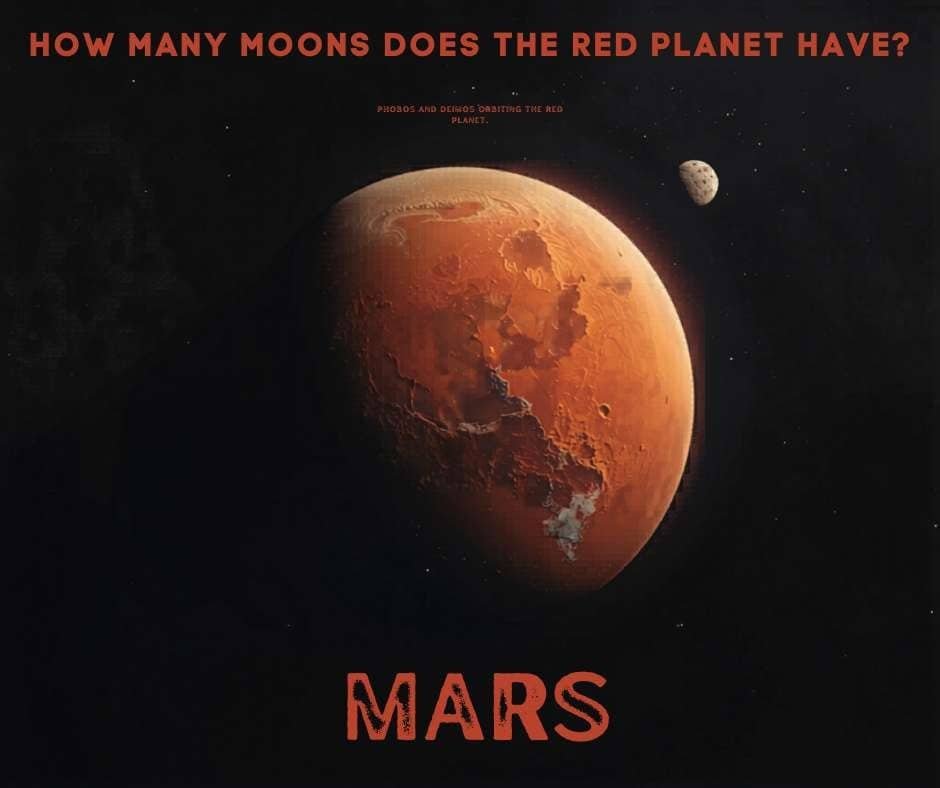
Mars Today
The latest photograph taken on Mars by NASA’s Perseverance rover (or Curiosity if Perseverance hasn’t transmitted recently). The caption shows the Sol number, the Earth date, and which camera took the shot.
Why it matters. There is a robot on another planet, and it sent a postcard yesterday. Most days you’ll see something mundane — a rock face, a wheel track, a Martian sunset over Jezero Crater. That’s exactly what makes it valuable. Mars stops being a topic from a textbook and becomes a place where things are quietly happening every day.
Earth From Space
A natural-color image of Earth captured by NASA’s DSCOVR satellite from the L1 Lagrange point — about 1.5 million km away, four times farther than the Moon.
Why it matters. Carl Sagan called Earth a “pale blue dot.” DSCOVR is the only camera positioned to give us a full-disc, sunlit view of the entire planet, every day. It’s a perspective shift in a single image: that’s every coastline, every storm, and every person you’ve ever met, all in one frame.
Asteroid Watch — today’s close approaches
NASA’s Near-Earth Object database, filtered to objects passing close to Earth today. Each row shows the object’s name, miss distance (in kilometers and in lunar distances), diameter, and relative velocity. Anything flagged PHA — Potentially Hazardous Asteroid — is marked.
Why it matters. Roughly thirty known asteroids pass within the Moon’s orbit every month. Almost all of them are small and harmless. But the dataset itself is the front line of planetary defense, and watching it makes the abstract idea of “space rocks” concrete. When something does graze Earth’s atmosphere — like the 2013 Chelyabinsk fireball — it’s tracked first by the same network feeding this list.
Space Weather
The current planetary K-index (Kp), a measure of geomagnetic activity caused by the solar wind, on a scale of 0 to 9. Quiet days sit at 0 to 2. Severe storms reach 8 to 9.
Why it matters. The Sun is constantly throwing charged particles at Earth, and our magnetic field bends them around. When the Sun is active, that interaction creates aurora — visible from mid-latitudes when Kp climbs to 6 or higher. Strong storms also disrupt GPS, shortwave radio, and satellites in low orbit. If you’ve ever wondered whether tonight is the night to drive north and try to catch the lights, this number is the answer.
Upcoming Launches
The next four scheduled rocket launches worldwide, with mission name, launcher, launch site, and a live countdown clock.
Why it matters. There is a launch somewhere on Earth roughly every two or three days now, between SpaceX, Roscosmos, China’s CNSA, ULA, Blue Origin, ISRO, JAXA, and emerging private companies. Knowing the next one is hours or days away — instead of stumbling on news after the fact — turns space launches from events that happen to other people into something you can actually watch live.
Next Eclipses
Countdown to the next solar and lunar eclipses anywhere in the world, with type and date.
Why it matters. Total solar eclipses are arguably the single most striking thing a human can witness with their own eyes — the sky goes dim, the temperature drops, animals get confused, and the Sun’s corona becomes visible to the naked eye. They happen somewhere on Earth roughly every eighteen months, but the path of totality is narrow. Knowing the date years in advance is how people plan eclipse trips.
How to use it
There’s no right way. The dashboard is meant to be glanced at — a kind of cosmic weather report that costs you fifteen seconds.
A few rituals worth trying:
- Bookmark it and check once a day, like a newspaper.
- Glance before going outside at night. If Sky Now says astronomical dark and a planet is up, you have something specific to look for.
- Check Space Weather when you see Northern Lights in your social feed — confirm whether your location is actually in range before driving anywhere.
- Show kids the Mars photo and the ISS map. Children grasp “robot on another planet” much faster than adults give them credit for.
Why this matters
Most of us live our lives looking down — at phones, at desks, at our own feet. The sky is the largest thing we have and the easiest to forget. This page is here to make that less easy.
You don’t need to become an amateur astronomer to benefit. You don’t need a telescope. You don’t need a dark-sky reservation a hundred kilometers from the city. You need fifteen seconds of attention a day, and you’ll start noticing things — a sliver of moon you would have missed, a launch you’ll watch live, a space station passing overhead at exactly the moment you happened to look up.
The cosmos isn’t somewhere else. It’s one click away. And you happen to live in it.
FAQs
Do I need a telescope to use this dashboard?
No. Every planet listed in Planets Tonight — Mercury, Venus, Mars, Jupiter, and Saturn — is bright enough to see with the naked eye when it's above the horizon, and the International Space Station appears as a fast-moving star that's the third-brightest object in the night sky after the Sun and the Moon. Binoculars help you see craters on the Moon and Jupiter's four largest moons, but no equipment is required to use 90% of what's on this page. The dashboard is designed for stepping outside and looking up, not for setting up a telescope.
The dashboard shows a strange location for me. Why?
The Sky Now and Planets Tonight sections are calculated for your location. When you first open the page, your browser asks permission to share your geolocation — if you allow it, the math is precise to your latitude and longitude. If you decline, or your browser blocks the prompt, the dashboard falls back to Seoul, South Korea. Reload the page and accept the prompt to fix it. Your location is never sent to any server: all astronomy calculations happen inside your browser, and only the public ISS, NASA, and NOAA endpoints are contacted, none of which know where you are.
How do I actually see the ISS from my backyard?
The map on this page shows where the ISS is right now, but to catch a visible pass you need a prediction for your exact location. NASA's free u0022Spot the Stationu0022 service (spotthestation.nasa.gov) and the ISS Detector app both deliver this — they list the date, time, and direction to look. Visible passes only happen when the station is above your horizon, sunlit, and your sky is dark — usually one to two hours after sunset or before sunrise. When ISS appears, it looks like a bright, steady u0022staru0022 gliding silently across the sky in three to five minutes. No flashing lights, no sound. Once you see one, you'll never confuse it with an airplane again.
What does the K-index actually mean? When can I see the aurora?
The planetary K-index (Kp) measures how much the Sun's solar wind is disturbing Earth's magnetic field, on a scale of 0 to 9. Each step roughly doubles the area where aurora becomes visible. Kp 0–3 is quiet, with aurora confined to the Arctic and Antarctic circles. Kp 4 is active — visible from Alaska, northern Canada, Iceland, and northern Scandinavia. Kp 5 is a minor storm, visible from Seattle, Minneapolis, and similar latitudes. Kp 6 is a moderate storm, visible from much of the northern U.S., the U.K., and southern Scandinavia. Kp 7 and above is a strong storm and can be visible from mid-latitudes including parts of Korea, Japan, the central U.S., and southern Europe. The same scale applies in the Southern Hemisphere — at Kp 6 or higher, aurora can be visible from Tasmania, southern New Zealand, and southern Argentina or Chile.
Are the u0022Potentially Hazardous Asteroidsu0022 actually dangerous?
Almost never. u0022Potentially Hazardous Asteroidu0022 (PHA) is a technical classification, not a warning. It means the object is larger than 140 meters and its orbit comes within 7.5 million km of Earth's at some point — that's about 19 times the distance to the Moon. None of the asteroids on this list will hit Earth on the date shown; close-approach distances are typically millions of kilometers. NASA tracks tens of thousands of objects, and any genuine impact threat would be announced by the agency directly, with months or years of warning. The list is fascinating because it's a daily reminder that the inner solar system is busy — not because any individual rock on it is a threat tonight.