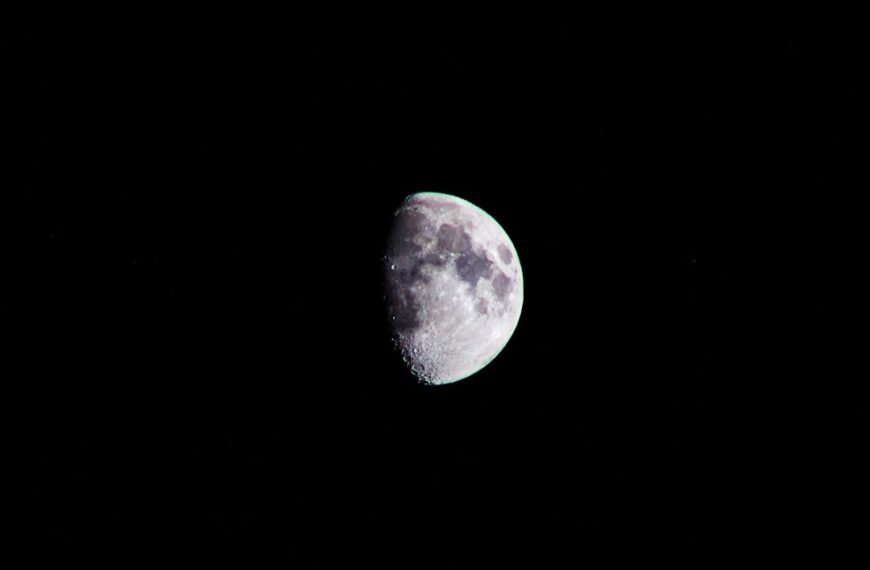

As of April 2026, the eight planets in our solar system have a combined total of 443 confirmed moons. Saturn leads with 292 moons, Jupiter has 101, Uranus has 29, Neptune has 18, Mars has 2, and Earth has 1. Mercury and Venus have zero moons.
Key Takeaways
- Saturn is the moon leader — 292 confirmed moons as of April 2026, nearly three times Jupiter’s count
- Mercury and Venus have no moons — the Sun’s gravity and tidal forces prevent stable satellites
- Moon counts keep rising — new telescope technology is discovering 1–2 km satellites that were previously invisible
- Most outer planet moons are tiny — the majority of Jupiter’s and Saturn’s moons are irregular fragments under 5 km wide
- Earth’s Moon is unusually large — it’s the fifth largest moon in the solar system relative to its planet
Moon Count by Planet — April 2026
| Planet | Moons (2026) | Most Notable Moon | Why So Many (or Few)? |
|---|---|---|---|
| Mercury | 0 | — | Hill sphere too small — Sun’s gravity dominates |
| Venus | 0 | — | Any moons spiraled in and crashed billions of years ago |
| Earth | 1 | The Moon (3,474 km) | Formed from giant impact with Theia ~4.5 billion years ago |
| Mars | 2 | Phobos, Deimos | Captured asteroids from nearby asteroid belt |
| Jupiter | 101 | Ganymede (largest in solar system) | Massive gravity captures passing objects; 4 large + 97 irregular |
| Saturn | 292 | Titan (larger than Mercury) | Collision debris formed hundreds of small irregular satellites |
| Uranus | 29 | Titania (1,578 km) | 5 major + 24 irregular; most recently found by JWST |
| Neptune | 18 | Triton (captured from Kuiper Belt) | Original moons destroyed by Triton’s capture; re-accreted from debris |
Why Do Mercury and Venus Have No Moons?
Mercury lacks moons because its Hill sphere — the zone where a planet can gravitationally hold a satellite — is extremely small. Mercury orbits just 0.39 AU from the Sun, and the Sun’s gravity dominates so completely that any passing object would be pulled away before it could settle into a stable orbit. According to NASA’s planetary science records, no known mechanism exists for Mercury to acquire or retain a moon.
Venus is a different story. Venus has a large enough Hill sphere to hold a moon, but scientists believe it once had one or more moons that were destroyed by tidal forces. Venus rotates extremely slowly — one Venus day equals 243 Earth days — and in retrograde (backward). Any moon that formed in the usual prograde direction would have been inside the synchronous orbit radius, causing it to spiral inward and impact the surface over billions of years.
How Many Moons Does Mars Have and What Are They?
Mars has exactly 2 moons: Phobos and Deimos, discovered by astronomer Asaph Hall in August 1877. Both are small, dark, and irregularly shaped — more like captured asteroids than true moons. Their low density and composition closely match D-type asteroids from the outer asteroid belt, supporting the capture hypothesis.
| Moon | Diameter | Orbital Period | Distance from Mars | Fate |
|---|---|---|---|---|
| Phobos | 22.5 km | 7.65 hours | 9,380 km | Spiraling in — will crash or form a ring in ~50 million years |
| Deimos | 12.4 km | 30.3 hours | 23,460 km | Slowly drifting outward — will eventually escape Mars |
Phobos orbits Mars faster than Mars rotates — from the Martian surface, it rises in the west and sets in the east. Tidal deceleration is drawing it closer at a rate of about 1.8 cm per year. JAXA’s MMX (Martian Moons eXploration) mission, launched in 2024, is currently en route to study Phobos and return a sample to Earth by 2029.
Why Does Jupiter Have 101 Moons?
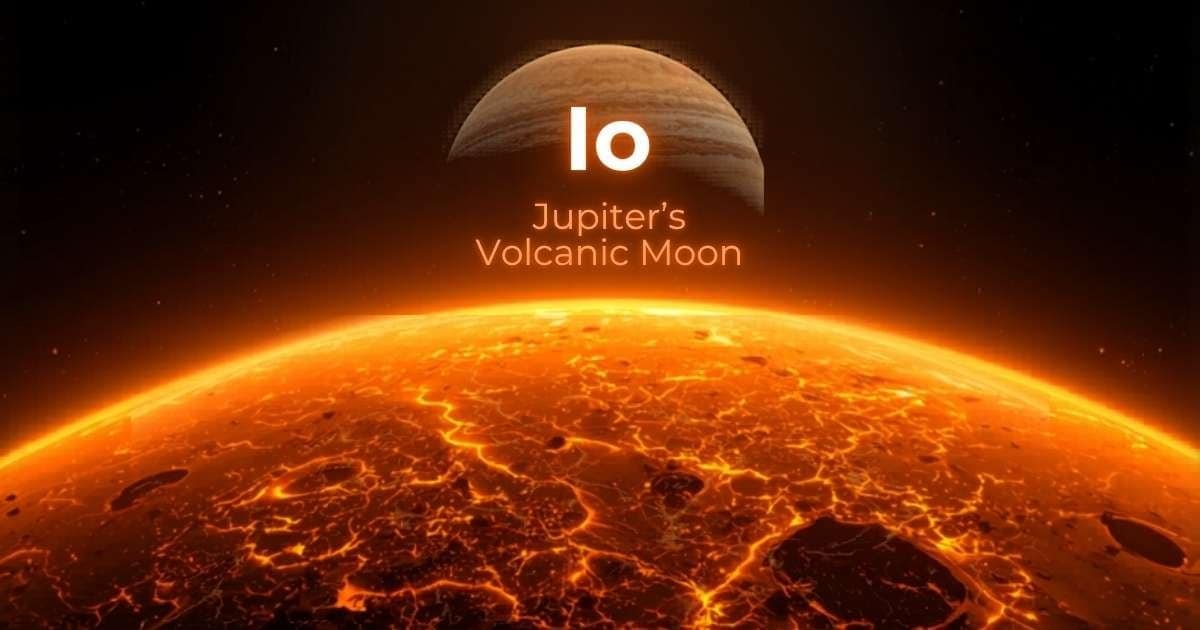
Jupiter reached 101 confirmed moons in March 2026 following confirmation of four additional irregular satellites by Dr. Scott Sheppard’s team at the Carnegie Institution. Jupiter’s enormous gravitational field allows it to capture small passing objects — mainly Kuiper Belt and asteroid belt escapees — into distant, eccentric orbits. The four Galilean moons (Io, Europa, Ganymede, Callisto) account for 99.997% of all the mass orbiting Jupiter and formed in a circumplanetary disk early in the solar system’s history.
| Galilean Moon | Diameter (km) | Key Feature |
|---|---|---|
| Io | 3,643 | Most volcanically active body in the solar system |
| Europa | 3,122 | Subsurface liquid ocean — leading candidate for extraterrestrial life |
| Ganymede | 5,268 | Largest moon in the solar system — bigger than Mercury |
| Callisto | 4,821 | Most heavily cratered surface in the solar system |
Why Does Saturn Have So Many More Moons Than Any Other Planet?
Saturn holds the record with 292 confirmed moons as of April 2026 — a count that has grown explosively thanks to new telescope technology. Dr. Edward Ashton’s team announced 128 new moons in March 2025 and another 11 in April 2026, all confirmed using the Vera C. Rubin Observatory and the shift-and-stack imaging technique. The vast majority belong to the Norse group — a swarm of retrograde moons 1–2 km in diameter, believed to be fragments of a larger body shattered in a collision within the last few hundred million years.
Saturn’s most scientifically important moon is Titan — the only moon in the solar system with a dense atmosphere and lakes of liquid methane on its surface. Titan is larger than the planet Mercury. Enceladus, another Saturn moon, actively vents water vapor from a subsurface ocean through cracks in its south pole — making it one of the most promising locations to search for life beyond Earth, according to NASA’s Ocean Worlds program.
How Many Moons Do Uranus and Neptune Have?
Uranus has 29 confirmed moons. Its five largest — Miranda, Ariel, Umbriel, Titania, and Oberon — are all composed primarily of ice and rock. On August 19, 2025, astronomers using the James Webb Space Telescope confirmed a 29th moon, designated S/2025 U1, measuring approximately 10 km in diameter. Unlike Jupiter and Saturn, whose moons are named after mythology, all Uranian moons are named after characters from Shakespeare and Alexander Pope.
Neptune has 18 confirmed moons, four of which were confirmed between 2024 and 2026 using the Magellan and Subaru telescopes. Neptune’s dominant moon, Triton, is 2,705 km across and orbits in retrograde — the opposite direction of Neptune’s rotation. This is a clear sign that Triton was captured from the Kuiper Belt rather than forming alongside Neptune. Triton’s arrival likely destroyed Neptune’s original moon system; its current inner moons are thought to have re-accreted from the debris. In about 3.6 billion years, Triton will be torn apart by Neptune’s tidal forces.
Why Do Outer Planets Have Far More Moons Than Inner Planets?
The answer comes down to the frost line — a boundary roughly 2.7 AU from the Sun where water, methane, and ammonia freeze into ice. Inside the frost line, only rock and metal could condense, producing small terrestrial planets (Mercury, Venus, Earth, Mars) with limited gravity. Beyond the frost line, ices were plentiful, allowing Jupiter, Saturn, Uranus, and Neptune to grow massive. Their size gave them two advantages: the gravity to capture passing objects as irregular moons, and circumplanetary disks rich enough to form regular moons in-place.
Why Do Moon Counts Keep Changing Every Year?
These numbers will change again. The Vera C. Rubin Observatory, which began full operations in mid-2025, can detect moons as small as 1 km in the outer solar system and issues up to 800,000 alerts per night about moving objects. Combined with the shift-and-stack technique — which stacks dozens of short exposures aligned to a planet’s motion, making faint moons appear as point sources while stars blur out — astronomers are discovering moons faster than at any point in history. Saturn alone may have thousands of kilometer-scale satellites not yet confirmed by the Minor Planet Center.
From the Editors
When we first wrote about planetary moons for The Universe Episodes, Saturn had 146 confirmed moons. By the time this article was published in April 2026, that number had nearly doubled to 292. We keep this article updated because moon counts are one of the fastest-changing facts in modern astronomy — not because new moons are forming, but because our telescopes are finally sensitive enough to see what was always there. If you’re reading this months after publication and the numbers look different, check the Minor Planet Center for the latest official counts.
FAQs
How many moons does each planet have in 2026?
As of April 2026: Mercury has 0 moons, Venus has 0, Earth has 1, Mars has 2, Jupiter has 101, Saturn has 292, Uranus has 29, and Neptune has 18. The total for all 8 planets is 443 confirmed moons. Saturn leads by a wide margin, with most of its moons being tiny 1–2 km irregular satellites discovered through advanced telescope surveys.
Which planet has the most moons?
Saturn has the most moons with 292 confirmed as of April 2026, nearly three times Jupiter's count of 101. Saturn's lead grew dramatically after 128 new moons were confirmed in March 2025 and 11 more in April 2026 by Dr. Edward Ashton's team using the Vera C. Rubin Observatory. Most of Saturn's moons are tiny retrograde fragments in the Norse group.
Why does Venus have no moons?
Venus has no moons because any moons it may have had were destroyed by tidal forces billions of years ago. Venus rotates extremely slowly and in reverse — one Venus day equals 243 Earth days. Any moon that formed would have been inside the synchronous orbit radius, causing it to spiral inward and impact the surface. No mechanism currently exists to give Venus a stable new moon.
Does Jupiter or Saturn have more moons?
Saturn has far more moons than Jupiter — 292 versus 101 as of April 2026. Saturn overtook Jupiter decisively after the confirmation of 128 new moons in March 2025. However, Jupiter's four Galilean moons (Io, Europa, Ganymede, Callisto) are individually far more scientifically significant, and Ganymede is the largest moon in the entire solar system.
How many moons does Mars have?
Mars has exactly 2 moons: Phobos and Deimos, both discovered by Asaph Hall in 1877. Phobos is 22.5 km wide and orbits Mars every 7.65 hours — faster than Mars rotates. Deimos is smaller at 12.4 km and orbits every 30.3 hours. Both are thought to be captured asteroids. Phobos is slowly spiraling toward Mars and will either crash into it or break apart to form a ring in about 50 million years.