
The 2026 Eta Aquarids meteor shower peaks on the night of May 5–6, 2026, with the best viewing window in the hours before dawn. It produces up to 50 meteors per hour under ideal conditions in the Southern Hemisphere, and 10–30 per hour from northern latitudes. The shower is caused by debris left behind by Halley’s Comet as Earth passes through its orbital trail every year.
Key Takeaways
- Peak night: May 5–6, 2026 — best viewing before dawn on May 6
- Parent comet: Halley’s Comet (1P/Halley), which won’t return until 2061
- Speed: Meteors travel at roughly 66 km/s, creating persistent glowing trails
- 2026 challenge: An 84% full waning gibbous moon will reduce visibility — plan to block it
- No equipment needed: Lie back in a dark area and let your eyes adjust for 20 minutes
If you have already explored our guide on how to watch a meteor shower for the first time, the Eta Aquarids are a perfect opportunity to put those tips to the test.
What Is the Eta Aquarids Meteor Shower?
The Eta Aquarids (also written as Eta Aquariids) are an annual meteor shower active between April 19 and May 28 each year. The meteors appear to radiate from a point near the star Eta Aquarii in the constellation Aquarius — that’s how the shower gets its name. The star itself, located about 168 light-years away, has nothing to do with the meteors. It’s simply the point in the sky they appear to emerge from.
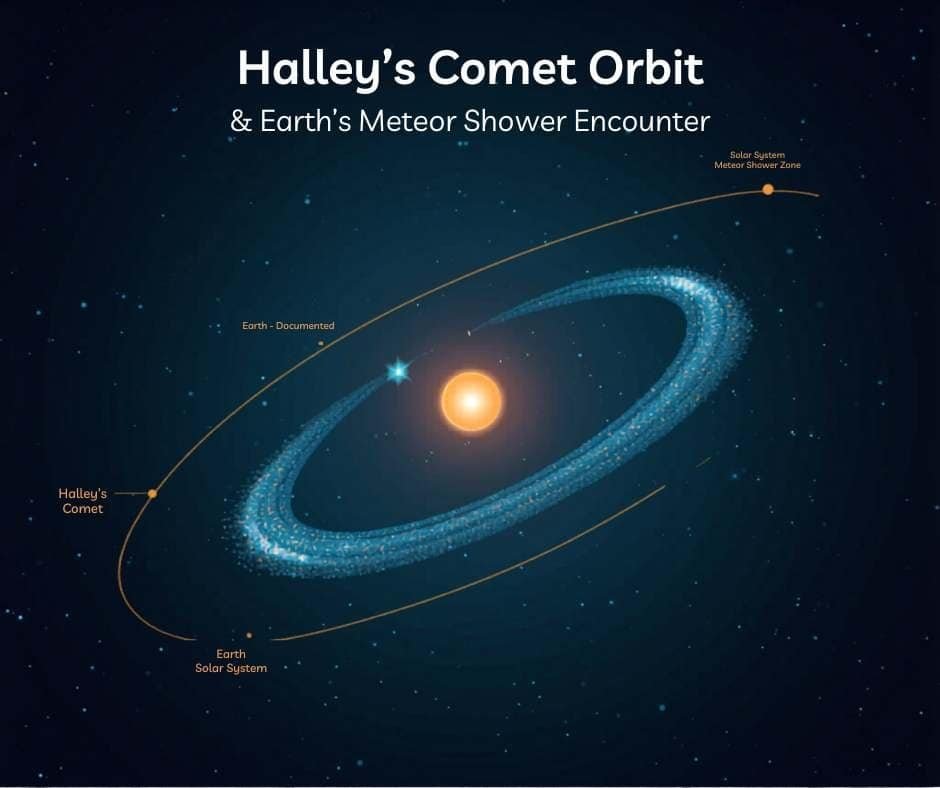
What actually creates the Eta Aquarids is much more famous: Halley’s Comet. As this legendary comet travels through the inner solar system on its roughly 76-year orbit, it sheds a trail of dust and rocky debris. Each May, Earth passes directly through that debris stream. The particles slam into our atmosphere at about 66 kilometers per second (41 miles per second), vaporizing instantly and producing the bright streaks we see as meteors.
When Exactly Does the 2026 Eta Aquarids Peak?
The predicted peak time for 2026 is 3:51 UTC on May 5, according to the American Meteor Society. In practical terms, this means the best morning to observe is before dawn on May 6 from most of the world. The radiant — the point meteors appear to stream from — rises after midnight and climbs highest just before sunrise, which is why pre-dawn hours consistently produce the most meteors per hour.
Activity remains elevated for about a week centered on the peak night, so if May 5–6 is cloudy where you are, you still have a window of a few days on either side.
How Many Meteors Will You See?
Under perfect dark-sky conditions with the radiant directly overhead, the Eta Aquarids can produce a zenithal hourly rate (ZHR) of 50. But ZHR is a theoretical maximum. Your actual experience depends heavily on three variables:
- Hemisphere: Southern Hemisphere observers see rates of 30–50/hour because the radiant climbs higher in their sky. Northern Hemisphere observers typically see 10–30/hour.
- Moon: In 2026, a waning gibbous moon at 84% illumination will be in the sky during peak hours. Moonlight washes out faint meteors, likely reducing visible rates to fewer than 10/hour for northern observers.
- Light pollution: A dark rural site will dramatically outperform a city backyard regardless of the moon.
The good news: Eta Aquarids are known for fast meteors with persistent glowing trains — bright trails that linger for a second or two after the meteor passes. These are easier to spot even in moonlit skies compared to faint, quick meteors from other showers.
Where in the Sky Do You Look for the Eta Aquarids?
The radiant of the Eta Aquarids sits in the constellation Aquarius, which rises in the eastern sky several hours before dawn. In the Northern Hemisphere, Aquarius stays relatively low on the horizon even at its highest point, which is why the shower produces lower rates there. The radiant climbs much higher in the sky from tropical and southern latitudes, explaining why places like Australia, South Africa, and South America enjoy significantly better views.
One important tip: don’t stare only at Aquarius. Meteors closest to the radiant have shorter, harder-to-see trails. The most spectacular meteors — the long blazing streakers — appear further away from the radiant. Scan the whole sky and let your gaze roam freely.
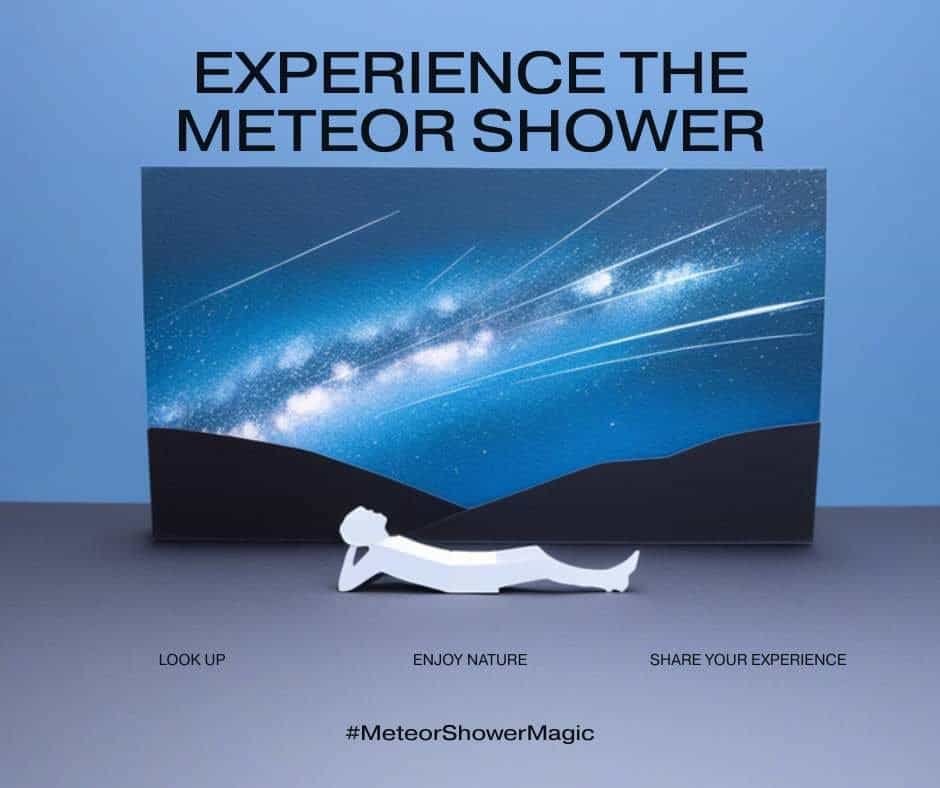
How Do You Watch the Eta Aquarids in 2026 Despite the Moon?
The bright moon is the main obstacle for 2026. Here are practical strategies to maximize your views:
- Block the moon physically: Position yourself so a building, hill, or dense tree line hides the moon from direct view, while keeping the rest of the sky open. This reduces glare significantly.
- Watch later in the morning: In some locations, the moon sets before sunrise — check moonset times for your city. Even 30–60 moon-free minutes before dawn can yield a good show.
- Go to the darkest site possible: Light pollution and moonlight compound each other. A rural site 30–60 minutes from a city makes a real difference.
- Give your eyes time: Full dark adaptation takes 20 minutes. Avoid phone screens and flashlights during that window — use a red flashlight if needed.
- No equipment needed: Binoculars and telescopes actually hurt your chances here because they narrow your field of view. Use your naked eyes and take in as much sky as possible.
What Makes the Eta Aquarids Special — The Halley’s Comet Connection
Halley’s Comet is one of the most historically significant objects in astronomy. Its 76-year orbit brings it close enough to the Sun that the comet heats up and sheds gas and dust, leaving a stream of debris along its path. Recorded sightings of Halley’s Comet stretch back more than 2,000 years, and it last passed through the inner solar system in 1986. Its next appearance won’t come until 2061.
Watching the Eta Aquarids in May is, in a real sense, watching physical pieces of Halley’s Comet burn up in Earth’s atmosphere. The same comet debris also creates the Orionid meteor shower every October, when Earth crosses the other side of the same debris trail. Most meteor shower guides cover the Eta Aquarids and Orionids separately, but understanding they share the same parent makes both events far more meaningful. You can explore how meteor showers form in our deep dive into why meteor showers happen.
From the Editors: Why We Always Watch the Eta Aquarids
Of all the annual meteor showers, the Eta Aquarids get underrated in the Northern Hemisphere simply because rates are lower than the August Perseids. But there’s something different about the Eta Aquarids that keeps us coming back. These aren’t just random space rocks — they’re Halley’s Comet. The same object that ancient civilizations tracked across centuries, the same comet that won’t return for another 35 years, is literally raining down on Earth right now in tiny pieces. We look at that differently. The Eta Aquarids also tend to produce some of the longest, slowest-fading trains of any shower, which makes each one feel a little more dramatic even when the hourly count is modest. In 2026, the moon is working against us, but one bright Eta Aquarid with a glowing trail lasting 3–4 seconds is worth setting the alarm for.
FAQs
When is the 2026 Eta Aquarids meteor shower peak?
The 2026 Eta Aquarids peak on the night of May 5–6, with the best viewing before dawn on May 6. The American Meteor Society predicts the peak at 3:51 UTC on May 5. Activity remains elevated for about a week around the peak date.
What causes the Eta Aquarids meteor shower?
The Eta Aquarids are caused by debris from Halley's Comet. As Earth passes through the trail of dust and rocky particles the comet left along its orbit, those particles enter the atmosphere at 66 km/s and burn up, creating meteors. The same comet debris creates the Orionid meteor shower every October.
How many meteors per hour can I see during the Eta Aquarids?
Under ideal dark-sky conditions, southern observers can see up to 50 meteors per hour. Northern Hemisphere observers typically see 10–30 per hour. In 2026, a waning gibbous moon at 84% illumination will reduce visible rates to fewer than 10 per hour for many observers.
Where should I look to see the Eta Aquarids?
Look toward the eastern sky before dawn, in the general direction of the constellation Aquarius. However, do not stare only at the radiant point — the best meteors appear far from the radiant as long blazing streaks. Scan the entire sky with your naked eyes for the best results.
Do I need a telescope to see the Eta Aquarids?
No. Telescopes and binoculars are not recommended for meteor showers because they narrow your field of view. The best tool is your naked eyes. Find the darkest location possible, lie back comfortably, and allow 20 minutes for your eyes to fully adjust to the dark.