
Smallest Known Exoplanets
| Planet | Size vs Earth | Distance | Discovery |
|---|---|---|---|
| Kepler-37b | ~0.31× Earth (Moon-sized) | 215 ly | Kepler, 2013 |
| Kepler-42c | ~0.73× Earth | 131 ly | Kepler, 2012 |
| Kepler-42d | ~0.57× Earth | 131 ly | Kepler, 2012 |
| L 98-59 b | ~0.85× Earth | 35 ly | TESS, 2019 |
| Earth | 1× (reference) | — | — |
Key Takeaways
- The smallest known planet is Kepler-37b, smaller than Earth’s Moon.
- Discoveries of tiny exoplanets challenge our understanding of planetary formation.
- Comparing small planets to the Moon helps visualize their true scale.
- Modern telescopes and space missions continue to push detection limits.
- Understanding small worlds helps refine models of how solar systems form.
What is the Smallest Planet Ever Found?
When astronomers first detected Kepler-37b in 2013, it changed our understanding of what counts as a planet. Measuring only about 3,900 kilometers in diameter, it is smaller than Earth’s Moon. This discovery showed us that planets can form at incredibly small scales, and that our Solar System is not the only place with tiny rocky worlds.
Smallest Planet vs the Moon: Why the Comparison Matters

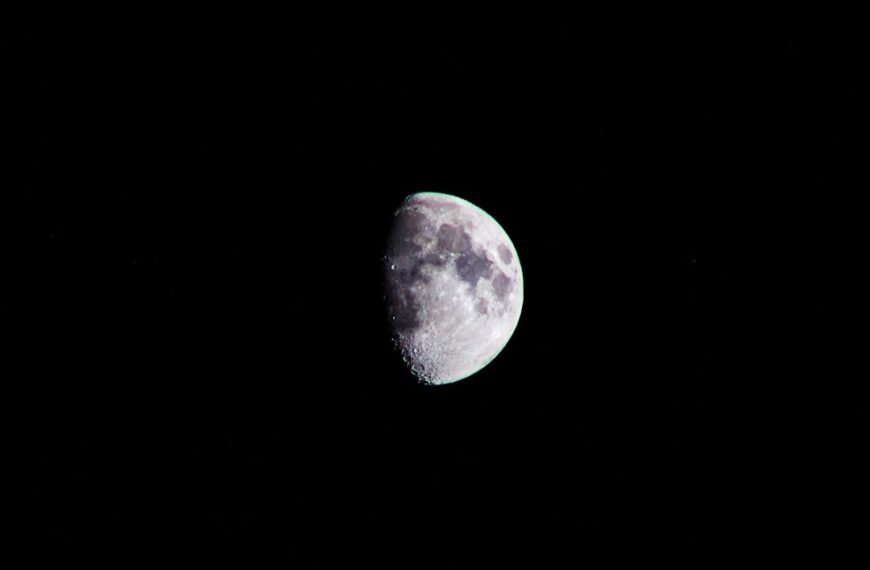
The Moon is a familiar object we see almost every night. Using it as a reference helps us visualize exoplanets better. While Mercury is the smallest planet in our Solar System, the fact that Kepler-37b is even smaller than the Moon highlights how diverse other planetary systems can be.
This comparison also answers a common question: If a planet is smaller than our Moon, can it still be stable? Kepler-37b proves it can, though it likely has no atmosphere and is not habitable.
How Are the Smallest Planets Discovered?
Detecting such tiny planets requires advanced techniques:
- Transit Method: Astronomers watch for small dips in starlight as planets pass in front of their star.
- Kepler Mission: NASA’s Kepler telescope was designed to detect Earth-sized and smaller planets.
- Precision Instruments: The ability to measure light at extreme sensitivity allowed Kepler-37b to be discovered.
At The Universe Episodes, we used NASA’s “Eyes on Exoplanets” tool to explore Kepler-37b ourselves. Seeing its size compared to the Moon made the scale more relatable.
Why Do Small Planets Matter?
Small exoplanets help us understand planetary formation in new ways:
- They show that rocky planets can form at many sizes.
- They expand the known diversity of planetary systems.
- They provide clues about how our own Solar System developed.
These findings are not just scientific trivia. They reshape our models of how planets emerge from disks of gas and dust around stars.
Top 5 Smallest Planets Compared to the Moon

Here are five of the smallest known exoplanets, compared with Earth’s Moon:
- Kepler-37b – smaller than the Moon.
- Kepler-42c – about the size of Mars, but still smaller than Earth.
- Kepler-138b – smaller than Earth, slightly larger than Mars.
- Kepler-20e – close to Venus in size but still in the small planet category.
- TRAPPIST-1d – slightly larger than Mars but among the smallest in a multi-planet system.
By setting these planets side by side with the Moon, readers can see that “small” is relative, yet still significant in planetary science.
Firsthand Experience: How We Saw It
 space, set against a dark starry background.” class=”wp-image-21546″/>
At The Universe Episodes, we often observe the night sky through telescopes. When we look at the Moon, its craters appear sharp and detailed. Observing Mercury through our equipment, it appears as a faint wandering star, barely larger than a bright point of light.
Later, exploring Kepler-37b through NASA’s exoplanet databases was eye-opening. Imagining a planet smaller than the Moon, orbiting a distant star, gave us a sense of how vast and surprising the universe is. These moments connect science to real human curiosity, making discoveries feel personal.
Frequently Asked Questions

What is the smallest planet ever discovered?
The smallest confirmed exoplanet is Kepler-37b, discovered by NASA's Kepler Space Telescope in 2013. It is roughly the size of Earth's Moon — about 3,900 km across or 0.31 times Earth's diameter. It orbits very close to its star and is far too hot for liquid water.
Is Kepler-37b smaller than Earth's Moon?
Kepler-37b is approximately the same size as Earth's Moon, making it the smallest confirmed exoplanet discovered. Earth's Moon has a diameter of about 3,474 km; Kepler-37b is estimated at about 3,900 km across — slightly larger than the Moon but far smaller than Earth.
How do astronomers detect small exoplanets?
Small exoplanets are detected using the transit method, which measures tiny dips in starlight as the planet passes in front of its star. Kepler-37b causes a brightness drop of only 0.0003% — requiring extremely sensitive instruments to detect. The smaller the planet, the harder it is to find.
Could small exoplanets support life?
Size alone does not determine habitability. What matters more is location (in the habitable zone), atmospheric composition, presence of water, and the stability of the host star. Kepler-37b is extremely hot and almost certainly uninhabitable, but other small exoplanets in habitable zones could theoretically support life.
What instruments are used to find small exoplanets?
NASA's Kepler Space Telescope (2009–2018) found most small exoplanets using the transit method. Its successor, TESS (Transiting Exoplanet Survey Satellite, launched 2018), continues this work. The James Webb Space Telescope (JWST, launched 2021) can study exoplanet atmospheres in detail.